
Choosing a deck stain: color, opacity and condition
Choosing a deck finish is about more than finding a brown you like. The wood underneath, its current coating and the amount of grain you want to see all shape the decision. Start with those questions before narrowing the color.
- Six chapters
- Planning checklist
- About a five-minute read
Choosing a deck finish is about more than finding a brown you like. The wood underneath, its current coating and the amount of grain you want to see all shape the decision. Start with those questions before narrowing the color.
Identify the starting point
Look for information about the existing stain or paint. An old container, invoice or product record can be useful. If none is available, ask for the surface to be assessed. A worn translucent stain and an opaque coating do not offer the same starting point. Share what you know about previous work and avoid assuming that a new finish can be applied directly over whatever is there.
Understand what opacity changes
Opacity describes how much the finish covers the wood’s appearance. Benjamin Moore’s stain guide offers options ranging from more transparent looks to solid color. More visible grain and more uniform color are different visual goals. Consider which you prefer, then discuss what is compatible with the existing surface. The choice of finish can affect both appearance and the preparation needed to reach it.
Judge samples on the right material
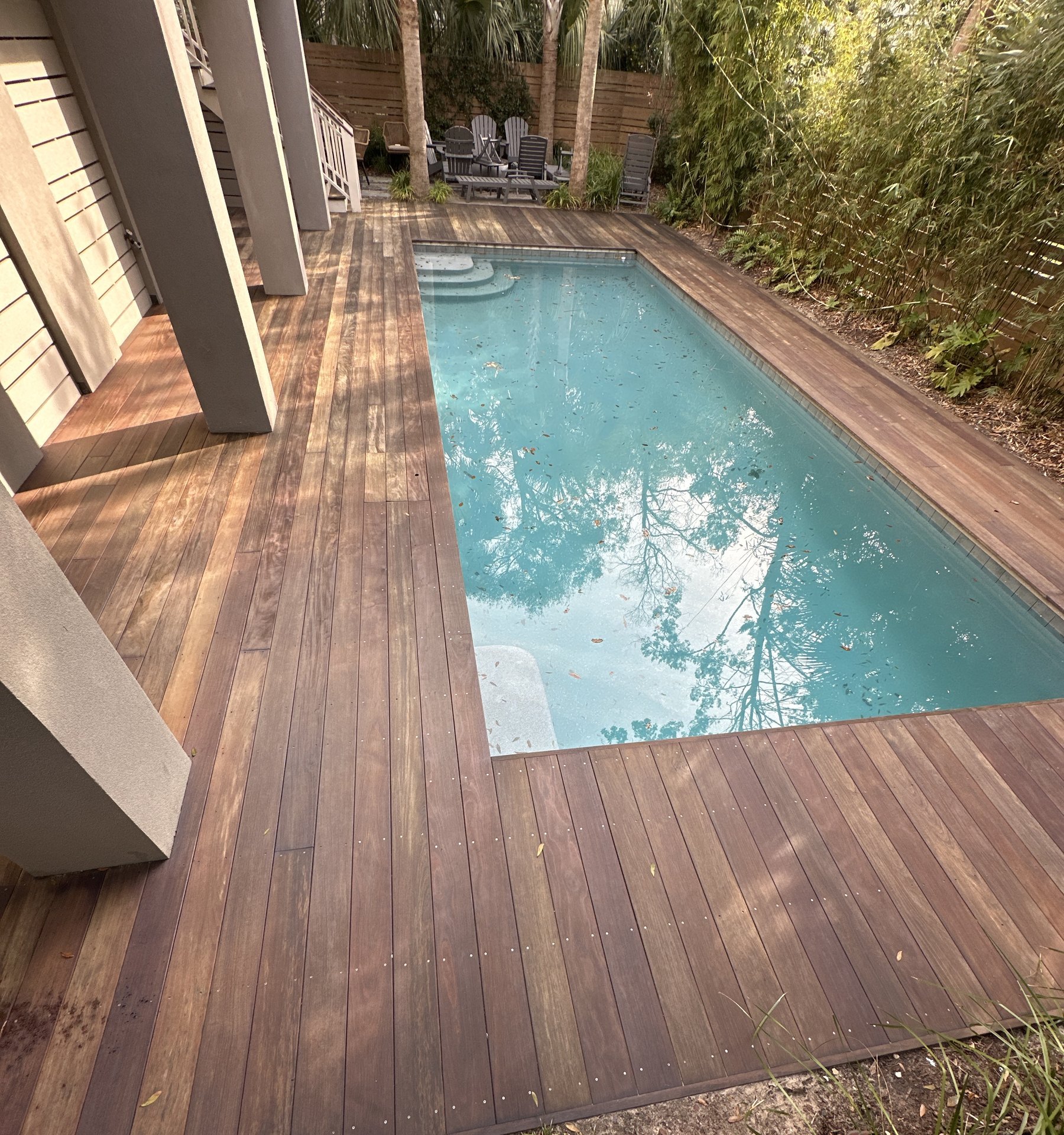
Wood has its own color and character. A sample image on a screen cannot fully predict how a stain will look on your boards. Where suitable, view a sample on the actual material and compare it in the light where the deck is used. Consider nearby siding, railings, furniture and planting as well. Keep the sample process part of the project conversation rather than assuming the final color from a printed name.
List every surface in the project
Horizontal decking, rails, posts and steps may be easy to overlook when you think of the deck as one item. Walk the space and decide what should be included. Identify components that need assessment or repair and ask how those items affect the sequence. Finish work and structural work should have clear boundaries. A coating does not replace a damaged board or make an unsafe component sound.
Discuss conditions and return to use
Ask how surface preparation, drying conditions and the selected coating shape the schedule. Confirm when you can walk on the deck, move furniture back and clean it. Those answers should come from the chosen product and the actual conditions, not a universal timetable. Mention any event or access need early so Greg can discuss what is realistic before you agree the work.
Keep the information that makes maintenance easier
Save the manufacturer, product, color and opacity after the project. Record which surfaces received which finish and retain the care instructions. When it is time to discuss maintenance, describe the condition you see instead of assuming the whole deck needs the same treatment. A clear record makes that later conversation more productive and helps prevent guesses about the existing coating.
Planning checklist
- Previous product or coating, if known
- Desired amount of visible wood grain
- Surfaces included and repairs assessed
- Appropriate sample and color choice
- Product record and return-to-use guidance
Further reading
Manufacturer guidance used for this guide: Benjamin Moore: choosing a wood stain. Product instructions and the actual surface control the work; this guide is planning advice, not a specification.
01 / Keep reading
More from the notebook.
Guides and posts written for Lowcountry homeowners before they pick up a chip.

02 / Your next chapter
Tell us about the house.
A conversation, a free onsite estimate and a scope in writing. No pressure to decide on the spot.
843.998.1649 info@palmettopaintingcontractors.com