Haint blue and Charleston green: what they are and how to use them
Two colours carry more Lowcountry history than any other on a Charleston house. Here is what is documented, what is legend, and how to choose them for your own porch and shutters.
- Sources linked
- Approval rules for Charleston and Mount Pleasant
- 9 minute read
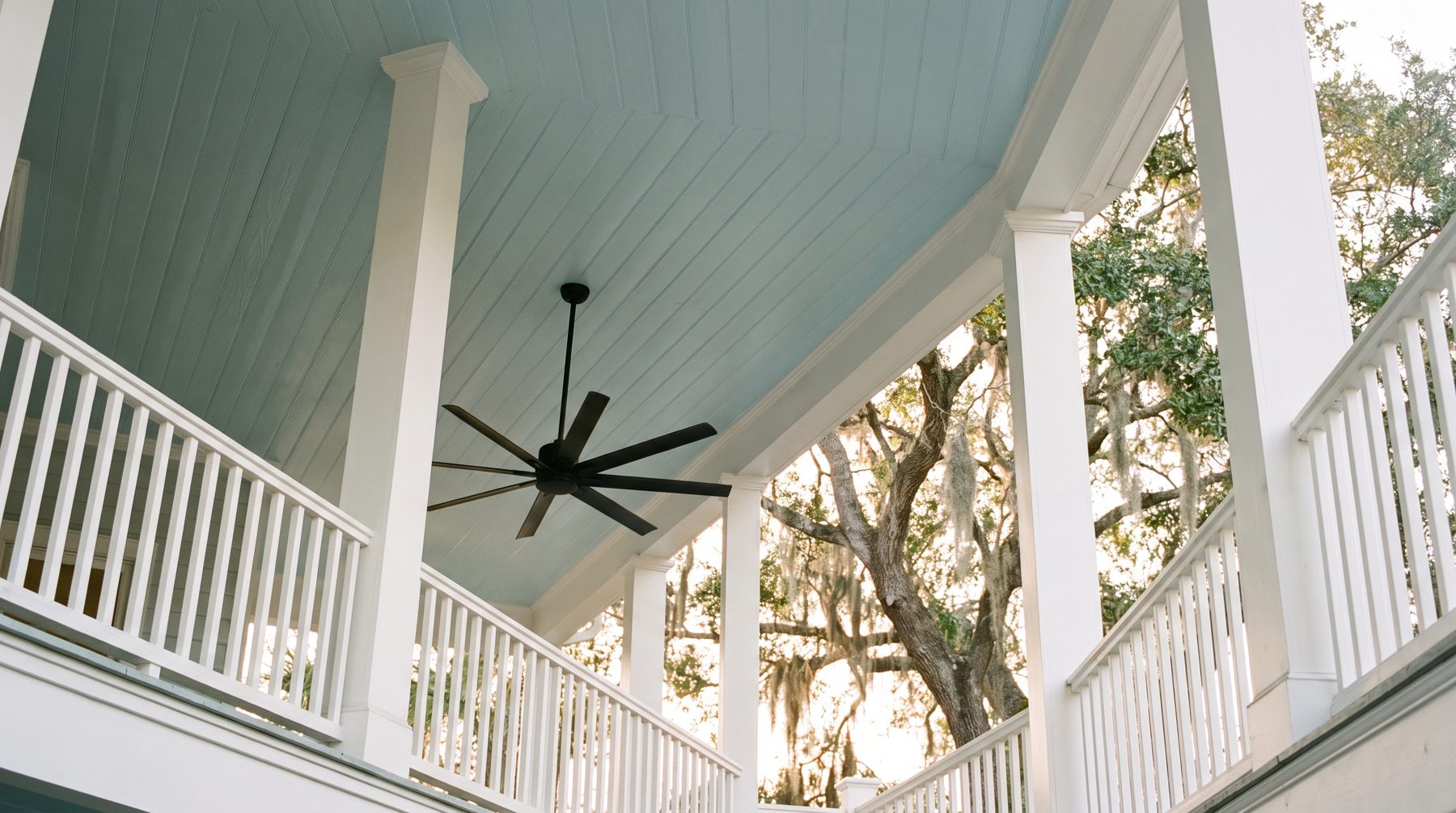
Look up on almost any old Charleston piazza and you will see it: a soft blue-green ceiling. Look at the shutters on the same street and many of them are a green so dark it reads as black in the shade. Haint blue and Charleston green are the two colours most people mean when they talk about Charleston paint.
Both come with stories attached. Some of those stories are well documented, some are family legend, and one popular claim about haint blue does not survive contact with an entomologist. If you are choosing either colour for your own house, it helps to know which is which, and to know what the City of Charleston or the Town of Mount Pleasant may need from you before the paint goes on.
Key takeaways
- Historians credit blue porch ceilings to Gullah Geechee tradition; there is no single official haint blue, only a blue-green range.
- The idea that haint blue repels insects is not well supported, so choose it for how it looks, not as pest control.
- The popular origin story of Charleston green is a legend. A named Historic Charleston Green does exist in the Colors of Historic Charleston deck.
- In Charleston’s historic districts a colour change goes through the Board of Architectural Review process. Colour is not exempt.
- Test both colours where they will live: haint blue in the shade of the porch, Charleston green beside your body and trim colours.
Where haint blue comes from
The blue porch ceiling is older than its name. Historic New England notes that most historians attribute blue porch ceilings to the traditions of the Gullah Geechee people, descendants of Africans enslaved on the rice, indigo and cotton plantations of the coastal Southeast. A “haint” is a restless spirit. In the tradition, a ceiling painted the colour of sky or water confuses the spirit, which cannot cross it.
That coast is now recognised in federal law. Congress designated the Gullah Geechee Cultural Heritage Corridor on 12 October 2006, according to the National Park Service. A later Senate report describes it as extending 425 miles along the coast and 30 miles inland, across all or part of 27 counties in four states. Charleston County sits squarely inside it.
The name itself is newer than the custom. In 2019 reporting by the Associated Press and The Post and Courier, one historian said the earliest newspaper mention she had found of blue porch ceilings as “haint blue” dates only to 1985, and another recalled mentions in Gullah oral histories from the 1930s and 1940s. That matters for one practical reason: there is no historical recipe and no single correct shade.
Does haint blue keep bugs away?
You will often hear that a blue ceiling keeps wasps from nesting, or that the lye in old whitewash did. The evidence is thin. An NC State entomologist interviewed by Good Housekeeping in 2025 put it plainly: colour repellency is not well supported. A small 2009 Texas AgriLife Extension trial did find fewer paper wasp nests under freshly painted eaves at the one-month check, but the differences at later observations were not significant.
So choose haint blue because it suits the house. A ceiling fan, screens and keeping the porch swept will do more for the wasps than any colour.
Choosing a haint blue for your porch ceiling
Historic New England notes that many blue-green paints are marketed and used for porch ceilings. That freedom is useful, because a ceiling is the hardest surface on the house to judge. It sits in shade most of the day and is lit by light bounced up from the porch floor, the yard and the street. A chip that looks pale and fresh in the store can look grey under a deep roof, or almost turquoise where the porch faces open water.
| If you lean toward | What tends to happen overhead | Worth testing beside |
|---|---|---|
| A greener blue-green | Reads softer and warmer; can look grey-green in deep shade | Cream or warm white trim, natural wood floors |
| A clearer sky blue | Reads brighter and more like sky; can look cold on a north-facing porch | Crisp white trim, grey or painted porch floors |
| A paler shade | Lifts a deep, dark porch; can disappear on a bright one | Low porch roofs and narrow piazzas |
| A deeper shade | Holds its colour in strong reflected light off water or sand | Island and waterfront porches |
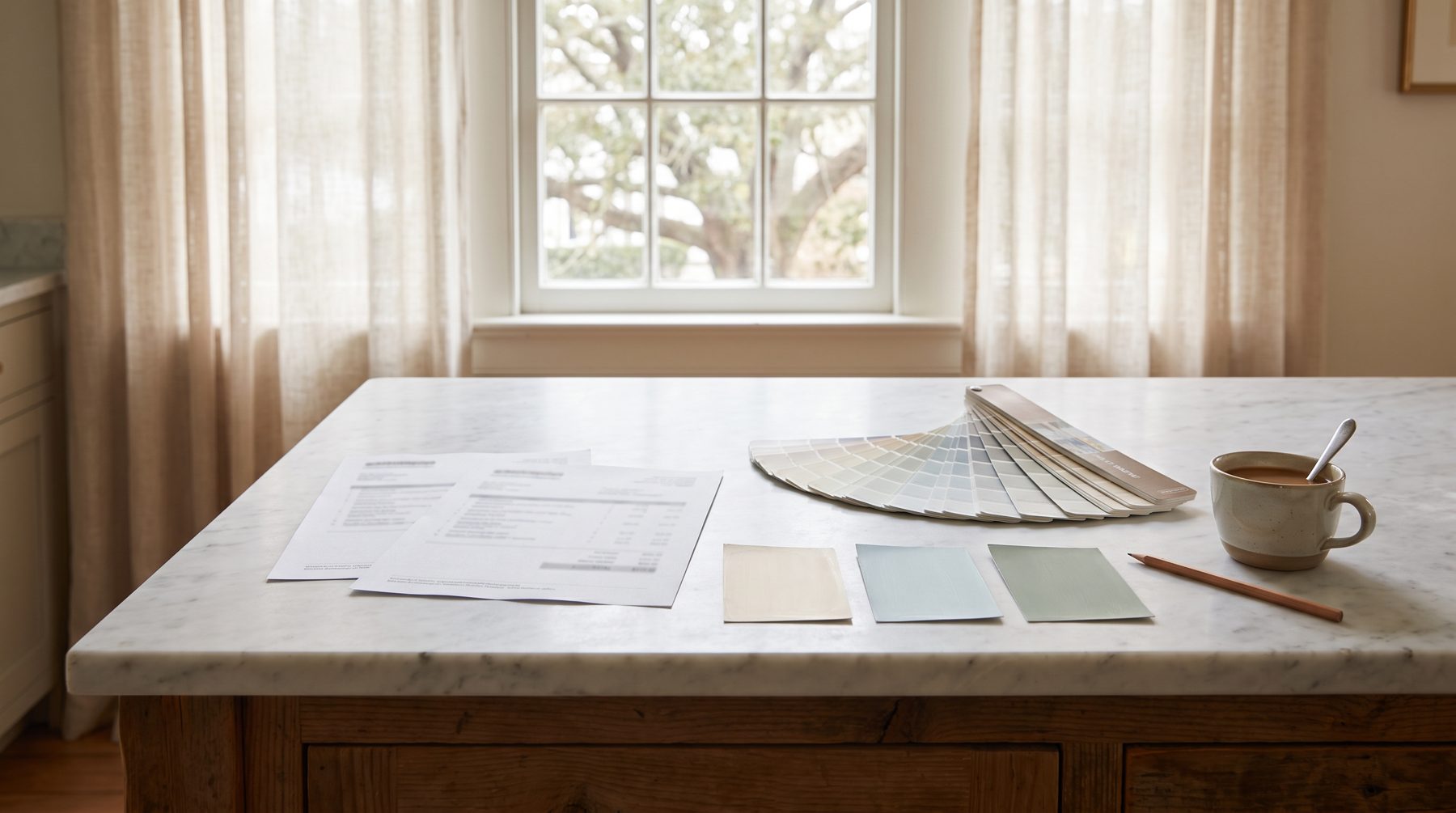
The practical test is simple. Paint two or three large sample boards, hold them flat against the ceiling at mid-morning and late afternoon, and look at them from where you actually sit. Then look again from the street, because the ceiling also shows from the sidewalk. Our guide to planning an exterior repaint walks through sampling the body, trim and accent colours together.
Charleston green: near-black, with a story
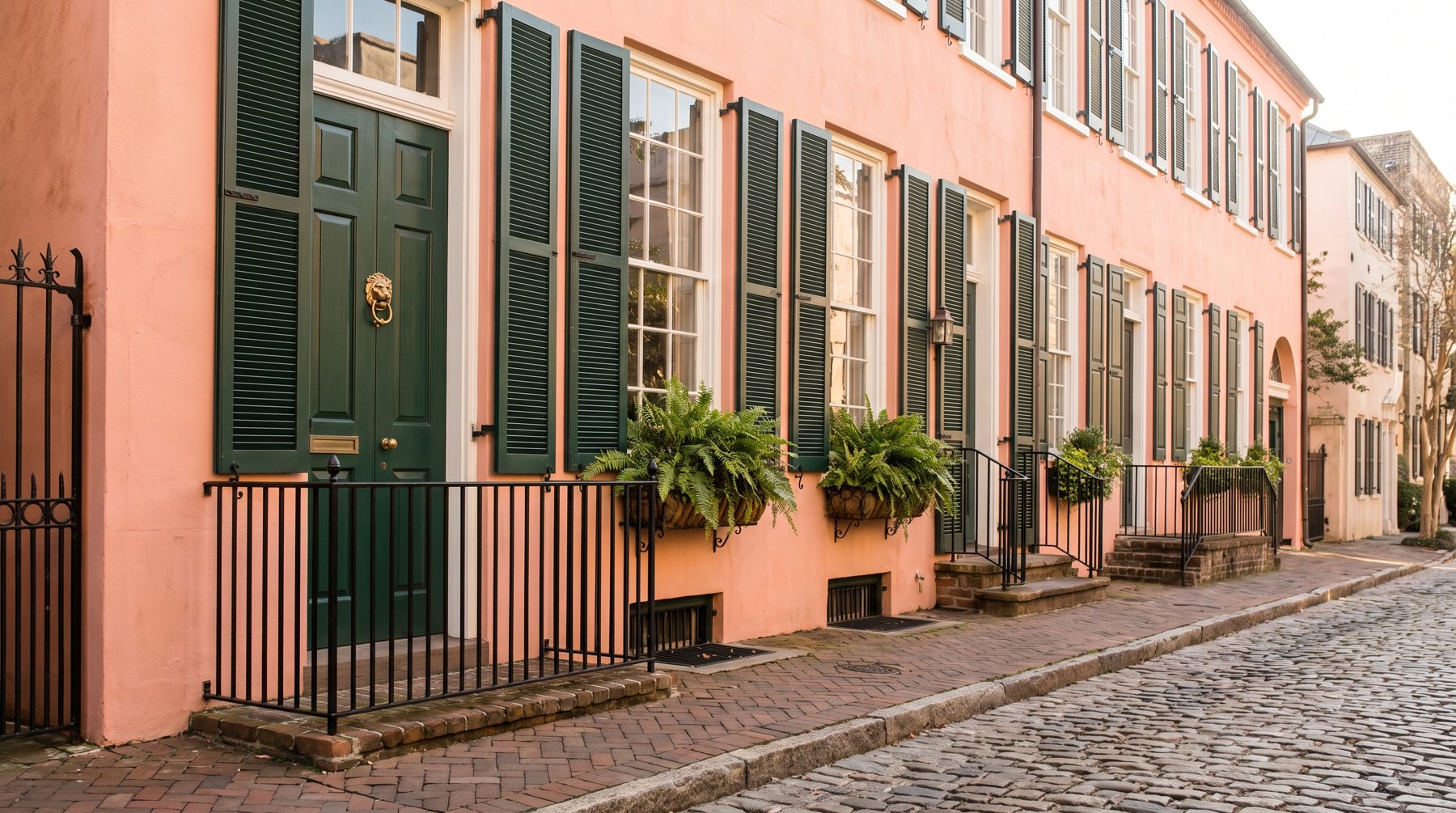
Charleston green is a green so deep it reads as black until the sun hits it. You see it on shutters, front doors, iron gates and railings across the peninsula. The story most people tell, as Charleston Magazine recounted it from the Historic Charleston Foundation, is that after the Civil War the city was offered black paint and locals mixed small amounts of yellow and green pigment into it to make it their own.
“Most historians attribute blue porch ceilings to the traditions of the Gullah Geechee people.”Historic New England, Haint Blue
There is also a plainer explanation for very dark old greens: some historic green pigments darkened with age, as research summarised by Colonial Williamsburg notes for verdigris. Whether that applies to Charleston’s shutters has not been shown. There is no primary record of the donated paint either, so treat the story as folklore, and a good one.
What is certain is that a named colour exists. The Historic Charleston Foundation’s Colors of Historic Charleston fan deck, a curated collection by Sherwin-Williams, includes a Historic Charleston Green. The Town of Mount Pleasant lists Historic Charleston Green among the approved fence colours in its Old Village historic district guidelines. If you have seen a Benjamin Moore code quoted online as “Charleston Green”, check it on the manufacturer’s site before you order; at least one widely shared code opens a different colour.
Where a near-black green earns its place
- Shutters and doors. The traditional home for Charleston green, and the easiest way to try it without committing the whole house.
- Iron and railings. It reads as black from the street and green up close, which keeps metalwork from looking flat.
- Against a pastel body. Coral, butter and haint blue all look cleaner next to a dark green than next to pure black.
- On a whole house, carefully. Very dark bodies are striking. Palmetto’s Charcoal House was painted entirely in Sherwin-Williams Tricorn Black; the Daniel Island Revamp used Kendall Charcoal on the siding with Chantilly Lace trim. Ask about the product and surface before choosing a dark body colour.
Rainbow Row and the pastel question
The pastels that sit beside Charleston green on so many postcards are newer than they look. According to the South Carolina Encyclopedia, Rainbow Row runs from 79 to 107 East Bay Street, and in 1931 Dorothy Haskell Porcher Legge bought and began renovating 99 to 101 East Bay. As the buildings were restored through the 1930s, 1940s and 1950s, the block became known as Rainbow Row. SC ETV describes the row as 13 pastel homes.
That history is a useful permission slip. Charleston’s colour tradition has always been a mix of old practice and twentieth-century taste, and a coral or butter house with Charleston green shutters is part of that tradition rather than a departure from it.
Approvals before you change a colour
This is the part most colour articles skip, and it is the part that can stop a project. In the City of Charleston’s historic districts, paint colour is reviewed. The City’s Board of Architectural Review page says most minor alterations, such as painting, are typically reviewed by staff and do not require full Board review. Typically is the important word.
| Where | What the guidance says | Source |
|---|---|---|
| City of Charleston historic districts | Painting is typically reviewed by staff. Submittals list a completed paint colour schedule form and a $30 fee. | City of Charleston BAR |
| Same colour repaint, City of Charleston | If the proposed colour matches the existing colour, only the BAR application is necessary. | BAR colour schedule form |
| Category 1 and 2 buildings | Must go before the Board for any alterations, including a paint colour change. | BAR General Guidelines, 2024 |
| Palette and products, City of Charleston | There is no specific palette of approved colours. Elastomeric or “waterproof” paints are not permitted. | BAR General Guidelines, 2024 |
| Old Village, Mount Pleasant | Muted hues chosen from the Colors of Historic Charleston chart are approved at staff level. | Town of Mount Pleasant HDPC guidelines |
If your house is in or near a historic district, raise it at the first conversation so the colour schedule and any sample the reviewers ask for fit into the timeline. If you live in a planned community, check its own design rules too; our Daniel Island painting page covers planning a repaint there.
How we help you choose
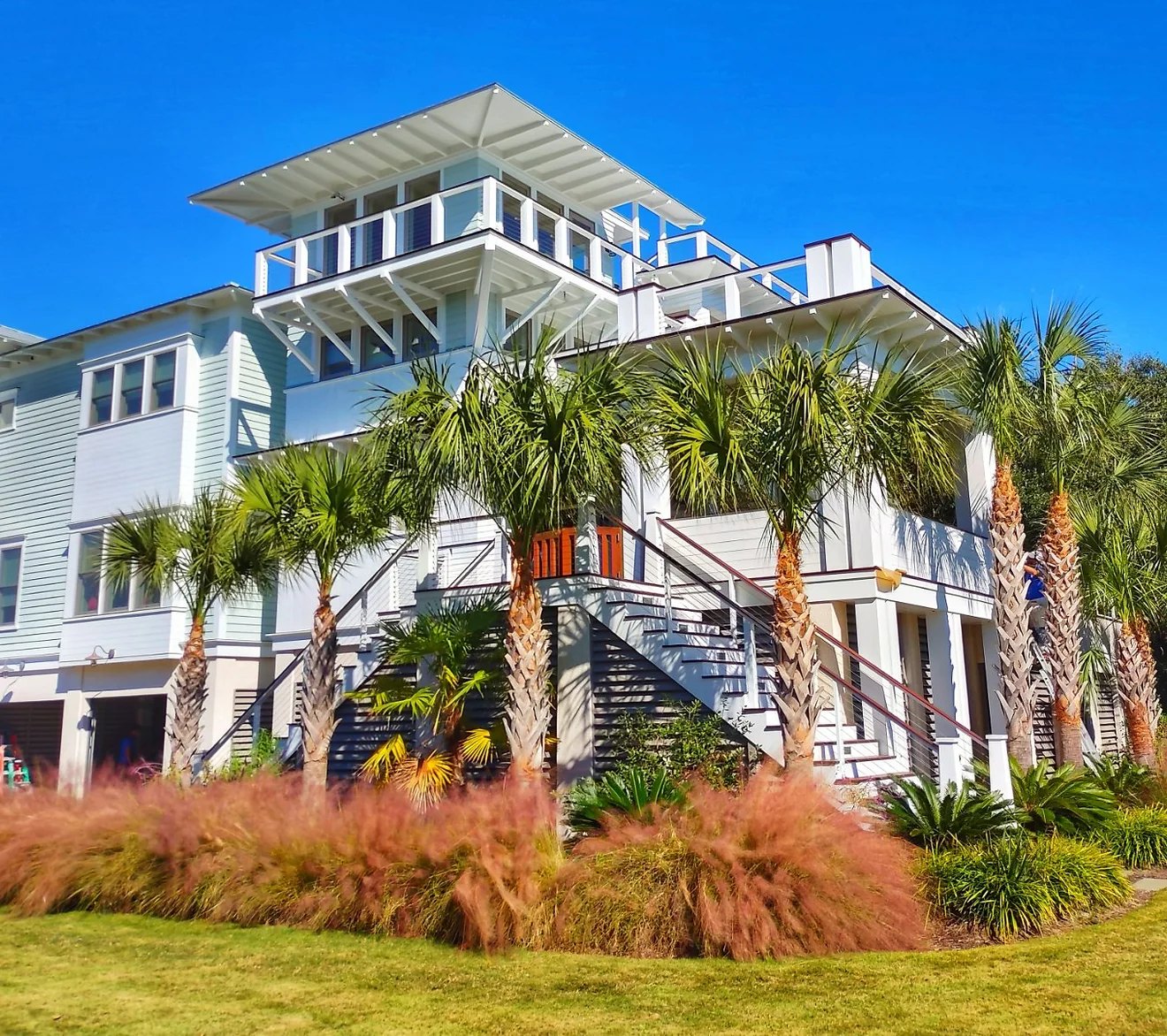
Greg Bores walks the house with you before anything is priced. Bring the colours you are drawn to, including a haint blue you saw on someone else’s porch, and talk them through with him at the onsite estimate, beside the roof, brick and trim you are keeping. One of Palmetto’s clients, Brooke H, put it this way in a review: Greg is “incredibly knowledgeable on paint colors, current trends and knowing what colors work/don’t.” That conversation is free. If your house is in a historic district, mention it then, so the colour review can be planned into the timeline.
Questions
What colour is haint blue?
There is no single haint blue. It is a family of pale blue-greens used on porch ceilings across the Lowcountry. Test two or three on large boards under your own porch roof before choosing.
Does haint blue really keep wasps away?
The evidence is weak. An entomologist told Good Housekeeping that colour repellency is not well supported, and a small 2009 Texas trial found fewer wasp nests only at the one-month check. Choose it for the look.
What is Charleston green?
A green so dark it reads as black in shade, used on shutters, doors and ironwork. The Historic Charleston Foundation’s Colors of Historic Charleston deck by Sherwin-Williams includes a Historic Charleston Green.
Do I need approval to repaint my house in downtown Charleston?
In the City’s historic districts, yes. Painting is typically reviewed by staff with a colour schedule form and fee, and Category 1 and 2 buildings go to the full Board for a colour change. Check current requirements with the City before you start.
Can I paint my Old Village, Mount Pleasant house any colour?
The Town’s guidelines approve muted hues from the Colors of Historic Charleston chart at staff level. Other colours may need further review, so confirm with the Town first.
Can Palmetto help me choose colours?
Yes. Talk colours through with Greg Bores at the free onsite estimate. Clients describe him as knowledgeable on paint colours and current trends.
Sources
- Historic New England: Haint blue
- National Park Service: Gullah Geechee Cultural Heritage Corridor
- South Carolina Encyclopedia: Rainbow Row
- City of Charleston: Board of Architectural Review
Also consulted: Town of Mount Pleasant Historic District (HDPC) guidelines, January 2025; AP / The Post and Courier (2019) on the name’s first printed use; Good Housekeeping (2025) and Texas AgriLife Extension (2009) on insects; Charleston Magazine (2019) on the Historic Charleston Foundation’s telling of the Charleston green story; SC ETV (2023) on Rainbow Row. Sources read 30 September 2026.
01 / Keep reading
More from the notebook.
Posts and guides for Lowcountry homeowners.

02 / Your next chapter
Tell us about the house.
A conversation, a free onsite estimate and a scope in writing. No pressure to decide on the spot.
843.998.1649 info@palmettopaintingcontractors.com