
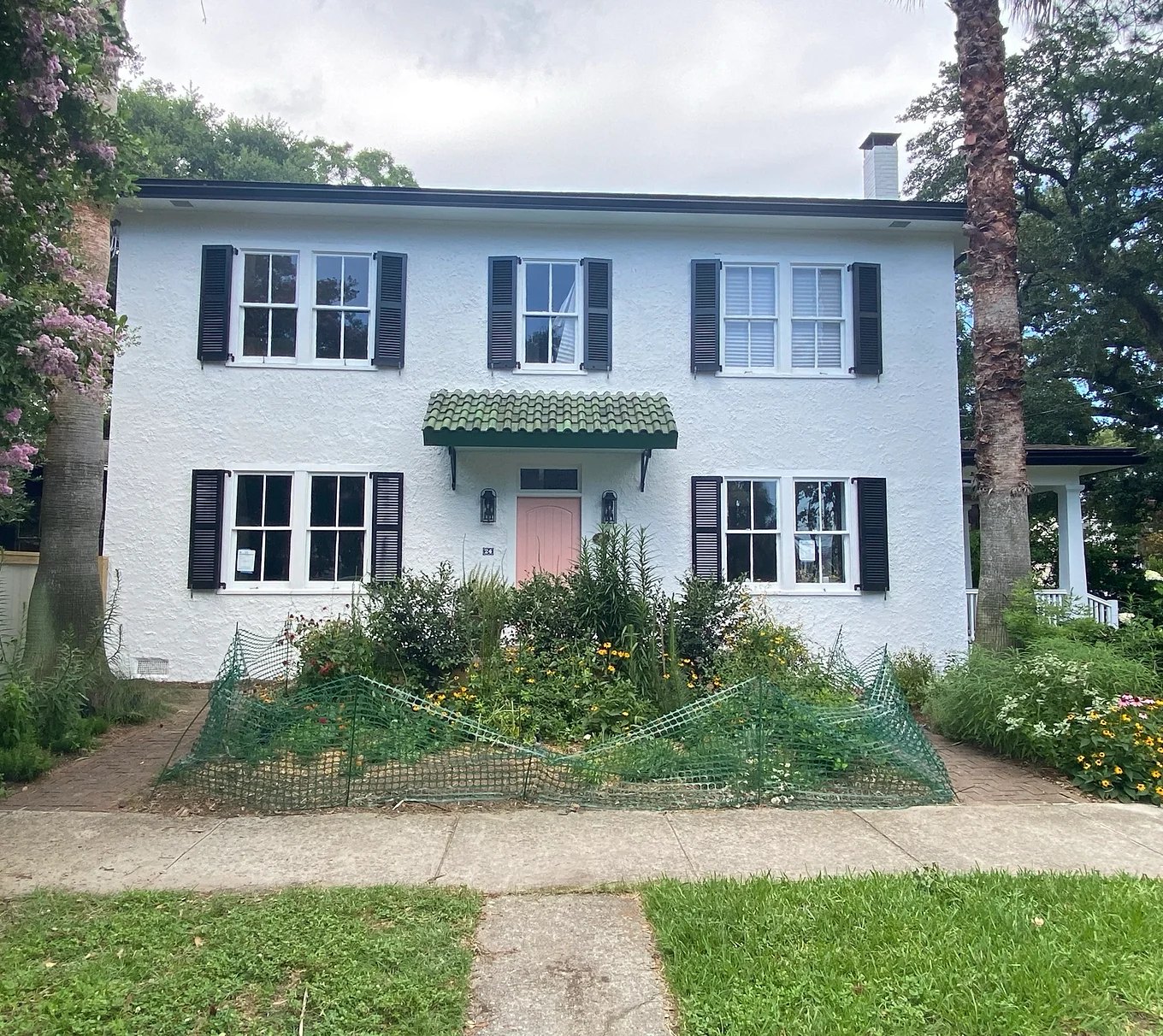
Board of Architectural Review, Charleston: getting a historic-district repaint approved, step by step
What the City of Charleston asks for when you repaint a house in a historic district, who decides, and which paints and methods it does not allow.
In 2024 a Charleston home magazine described Sherwin-Williams' Historic Charleston collection as a 48-color palette approved by the Board of Architectural Review. Charleston's own BAR guidelines say the opposite. There is no list of approved colors, and that mix-up is where plenty of historic-district repaints go wrong.
The Board of Architectural Review in Charleston reviews exterior paint on houses in the City's historic districts when the work shows from the street, and that includes repainting the same color. Most paint requests are decided by City preservation staff. Painting brick, stone or stucco that has never been painted goes to the Board itself.
Three things to settle before anyone opens a can
Same color as now: you still apply
Yes. The City's Color Change Form says that if the proposed color matches the existing color, only the BAR application is necessary. The color form drops out, and the application and review stay.
The same form adds a line people miss: any repairs or replacements to parts of the house that will be painted have to be written into the scope of work on the application. A repaint that includes new trim boards or rebuilt shutters is a repaint with repairs, and the paperwork should say so.
Whether your street falls under the BAR
Check the City's BAR boundaries map, then ask staff. In the Old and Historic District and the Old City District, exterior repairs and alterations are reviewed when they are visible from a public right-of-way. Landmark Overlay properties are reviewed whether you can see the work or not.
Staff decide what counts as visible, and the guidelines say staff make the final call on what falls under the BAR at all, so a call to the preservation office settles it.
A list of colors that pass does not exist
No. The guidelines say approval is case by case, judged on the style of the architecture, the character of the buildings next door and the neighborhood. Garish colors are to be avoided, and staff can ask for a paint sample on the building.
"There is no specific palette of 'approved colors.'"City of Charleston, BAR General Guidelines, March 2024
The guidelines name one reference by title: the Historic Charleston Foundation colorsheet, "an informational resource for colors commonly found in Charleston." They then say it is not a pre-approved list and staff review is still required. The Foundation sells The Colors of Historic Charleston fan deck, described as a curated collection by Sherwin-Williams. I find it a useful place to start choosing, though a color from the deck still goes through staff review like any other.
What goes in the paint submittal
The City's checklist for painting, repairs and replacements in kind is one page. For a color change it asks for:
- The completed BAR application, with any repairs to trim, siding or shutters written into the scope.
- Photographs of every side of the house visible from the street, plus close-ups of any rot. Staff ask for printed copies they can keep, because online images and old file photos do not always show the house as it is today.
- The paint color schedule, with samples attached.
- The fee, listed on that checklist as $30 for a color change.
The color form itself has a box for each part of the house: main body, foundation, roof, trim, window sash, shutters, exterior doors, the piazza columns and balustrade, the piazza deck, the piazza ceiling, and walls or fences. Each box asks for a color name, a manufacturer and a code. Custom mixes need a physical swatch, and staff may ask for a 3-foot by 3-foot sample painted on site.
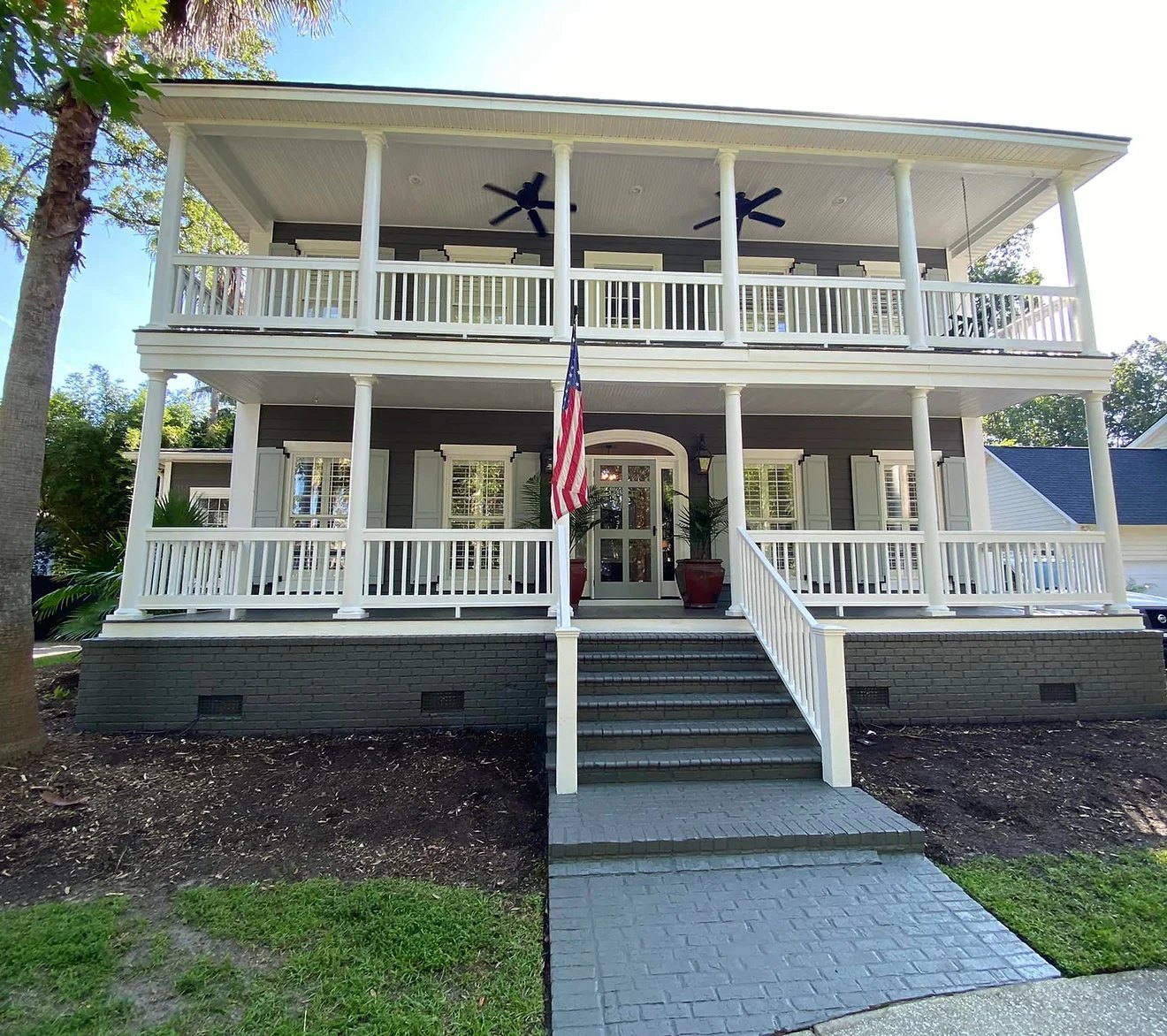
That is the same level of detail a good painting scope already carries. On my Daniel Island Revamp job, the published spec reads Benjamin Moore Aura, siding in Kendall Charcoal, trim in Chantilly Lace. Write your colors down like that, product and name, then add each color's code, and the form fills itself in.
Who signs off: City staff or the full Board
Charleston rates buildings in its architectural inventories from Category 1, "Exceptional", to Category 4, "Contributory". The rating changes who reviews some work, and staff can tell you which one your house carries.
| Your situation | Who decides | Detail from the City |
|---|---|---|
| Same-color repaint, visible from the street | Staff | BAR application only, no color form |
| New color, Category 3 or 4 building, or unrated | Staff | $30 color change fee; 3 ft by 3 ft test sample if staff ask |
| New color, Category 1 or 2 building | Staff, under the policy as amended 24 Sep 2026; ask first | The 2024 booklet is split on this; staff may refer any application to the Board |
| Painting brick, stone or stucco that was never painted | The Board | Board-level approval required |
| Elastomeric or "waterproof" paint on historic masonry | Not permitted | Banned in the 2024 guidelines |
| You disagree with a staff decision | The Board, on appeal | Appeal within 15 calendar days |
The third row needs a note. The 2024 guidelines booklet is itself split: one page sends Category 1 and 2 paint color changes to the Board, while its purview chart lists painting among the items staff may review. The Board's policy statement on applications processed by staff, as amended by motions of the BAR-L on 10 January 2024 and the BAR-S on 24 September 2026, lists color changes among the items staff may handle for Category 1 and 2 buildings too, and says applicants may appeal any staff decision to the Board. Confirm with staff before you plan around any of it.
Brick, stucco and the paints the City will not allow
Brick that has never been painted
Only with the Board's approval, and the guidelines lean hard against it. They say brick in general should not be painted unless it was painted before, because paint on historic brick can trap moisture in the wall and lead to water getting inside. Historic unpainted stucco and brick should stay unpainted, and the patina of old stucco is often part of what the City wants kept.
Why elastomeric paint is off the table
Because the guidelines ban it outright: "Elastomeric or 'waterproof' paints are not permitted." Waterproof coatings on historic masonry and stucco are also not permitted, for the same moisture reason.
The rules reach paint removal as well. Disc sanding, sandblasting and open flame are never permitted. Mechanical sanders are allowed on flat boards only, never on details, and highly acidic strippers are out. Staff can point you to stripping gels and orbital sanders instead. The same page warns that any home built before 1978 is likely to have lead-based paint somewhere, which is its own set of federal rules; my post on lead paint testing in pre-1978 homes covers them.
BAR approval, step by step
For a typical staff-level repaint, the order runs like this.
- Confirm the house is inside a historic district and ask staff for its inventory category.
- Check the deed for a Historic Charleston Foundation easement or covenant. The Foundation holds them on nearly 380 properties, and it requires its own approval before you apply to the City.
- Choose colors and get samples. Write down the name, manufacturer and code for every part of the house on the form.
- Photograph each side of the house that shows from the street, and print the photos.
- Apply. Simple requests such as painting can be filed in person at the Permit Center at 2 George Street or as a permit through the City's Customer Self-Service portal, where preservation staff review them.
- Paint the test patch if staff ask for one, then wait for the decision.
- Collect the BAR placard, and give your painter a copy of the approval before work starts.
Timing: what the City publishes and what it leaves out
The City's BAR web page gives no turnaround time for a staff review. It says staff decisions are posted weekly on the website, and that anyone can appeal one within 15 calendar days. If you are counting days for a contractor, count that window too.
A Board hearing runs on a calendar. BAR-S, the board for smaller projects, meets on the second and fourth Thursdays at 4:30 p.m. at 2 George Street, and BAR-L meets on the second Wednesday. Applications are due by noon on the deadline date in the City's posted schedule; for the 23 July 2026 BAR-S meeting, that deadline was 6 July. BAR-S agendas are capped at 15 items and BAR-L at 8, and in July 2026 the City posted that the 9 July BAR-S agenda was already full. Board submittals go through the Customer Self-Service portal, and a new portal account can take up to three business days to activate.
So for a staff-level repaint, apply before you book the painter's start date. For anything that needs the Board, allow at least one full meeting cycle and the deadline ahead of it. When I take a job, the welcome email I send on acceptance sets the timeline, the deposit and the color choices. On a historic-district house, that start date belongs after the approval.
Settle these with your painter before the application goes in
- Who files the BAR application and the color form: you, or the contractor on your behalf.
- Whether the written scope names every repair to trim, siding and shutters, because the City wants those listed on the application too.
- How old paint will come off without the methods the City bans, and how the federal lead-safe rules apply if the house was built before 1978.
I do every onsite estimate myself and write the scope, with Sherwin-Williams or Benjamin Moore products chosen for each surface. One client, Brooke H., wrote in a review that Greg is "incredibly knowledgeable on paint colors" and on knowing which colors work. That helps with a color you would like staff to approve, though staff still have the final say. If your house is on the peninsula, my Charleston service area page covers the neighborhoods I work in, and my post on haint blue and Charleston green covers two colors you will see on many Charleston houses.
My advice from the painting side is to get the approval in hand first and order the paint after.
The follow-up questions
How long does BAR staff review take for a paint application?
The City does not publish a turnaround time for staff review. It does post staff decisions weekly on its website, and a staff decision can be appealed to the Board within 15 calendar days.
Do I need BAR approval to repaint my house the same color?
Yes, if the house is in a Charleston historic district and visible from the street. The City's Color Change Form says a same-color repaint needs only the BAR application, without the color form.
Does the Charleston BAR approve specific paint colors?
No. The 2024 BAR General Guidelines say there is no palette of approved colors. Staff judge each color case by case against the building's style, its neighbors and the neighborhood.
Can I paint unpainted brick in Charleston's historic district?
Only with Board-level approval, and the City's guidelines advise against it: brick should not be painted unless it was painted before, because paint can trap moisture in a historic wall.
Can I use elastomeric paint on a historic Charleston building?
No. The BAR General Guidelines state that elastomeric or waterproof paints are not permitted, and waterproof coatings are not allowed on historic masonry or stucco.
Ready to price a historic-district repaint? The free quote form has room to note that the house is in a historic district.
Sources
- City of Charleston: BAR General Guidelines (published March 2024)
- City of Charleston: BAR Color Change Form
- City of Charleston: Review requirements for painting, repairs and replacements in kind
- City of Charleston: Policy Statement on Applications to be Processed by Staff (BAR-L 10 Jan 2024, BAR-S 24 Sep 2026), posted with the 14 Oct 2026 BAR-L agenda
Also consulted: City of Charleston, Board of Architectural Review (BAR-L and BAR-S) web page, charleston-sc.gov/293; Historic Charleston Foundation, The Colors of Historic Charleston fan deck product page, shop.historiccharleston.org; Charleston Home + Design, "The Colors of Historic Charleston with Sherwin-Williams and Megan Molten" (22 Feb 2024).
01 / Keep reading
More from the notebook.
Posts and guides for Lowcountry homeowners.

Free painting quotes in Charleston and Mount PleasantTell us about the house.
A conversation, a free onsite estimate and a scope in writing. No pressure to decide on the spot.
843.998.1649 info@palmettopaintingcontractors.com