

Lead paint testing for pre-1978 Lowcountry homes, before you repaint
What the year your house was built tells you, how testing works in South Carolina, and the questions to put to any painter before old paint gets scraped.
Not every house built before 1978 has lead paint, but enough of them do that lead paint testing belongs before any repaint that scrapes, sands or cuts into old paint. In Charleston County, about one home in three was built in 1979 or earlier, according to the Census Bureau's 2024 American Community Survey.
A test tells you which surfaces carry lead. Federal rules then decide how anyone you pay has to work around them. I run a painting company, not a lead inspection firm, so this post sticks to what the EPA, the federal regulations and South Carolina's own lead pamphlet say, and to the questions a homeowner should put to any painter, me included.
Why 1978 is the year that matters
In 1978 the federal government banned the sale of lead-based paint for use in homes. The EPA's homeowner page puts the consequence plainly: if your home was built before 1978, it is more likely to have lead-based paint. South Carolina's lead pamphlet, hosted by the state Department of Environmental Services, goes a step further. Windows, doors, walls, porches and exterior siding on buildings from before 1950 are even more likely to carry it.
Here is what that looks like locally. The 2024 American Community Survey counts 216,974 housing units in Charleston County. Of those, 73,282 were built in 1979 or earlier, and 16,529 in 1949 or earlier. The survey groups years by decade, so it cannot split out 1978 itself, and these are estimates with margins of error. Even with those caveats, tens of thousands of local homes predate the ban.
"Lead-based paint" also has a legal definition. Under the federal regulations it means paint containing at least 1.0 milligram of lead per square centimeter, or more than 0.5 percent lead by weight. That threshold is what every test below is measuring against.
A quote request, and the year it left out
In late October a Summerville homeowner used the quote form on my website to ask for interior and exterior painting together, hoping to start within one to three months. The form asked about the work and the timing. It did not ask when the house was built.
That gap is common, and it matters more than the timing does. If a house like that predates 1978, the year decides whether testing comes first and how the preparation has to be done. One to three months is plenty of room for a test, provided someone asks the question early.
So put the year your house was built in the very first message to any painter.
How to get the paint tested
There are a few routes, and they answer slightly different questions.
- Find the year the house was built, from your closing papers or the county property record.
- Decide between an inspection and a risk assessment. EPA describes an inspection as a surface-by-surface check of whether there is lead-based paint and where. A risk assessment looks for lead hazards in paint, dust and soil and suggests ways to control them. Only a certified inspector or risk assessor may legally do an inspection, and only a certified risk assessor may do a risk assessment.
- Find one through EPA. South Carolina is one of the states where EPA runs the lead-based paint program itself, so the EPA locator is where certified people are listed.
- For a repaint only, ask whether the renovation firm will test the specific parts being painted. Under 40 CFR 745.82, a certified renovator can test each component with an EPA-recognized kit, or send paint chips to an EPA-recognized lab. Components that come back below the federal threshold fall outside the renovation rule.
- Keep the written results with your estimate, so the scope and the test agree.
On store-bought kits, the state pamphlet is blunt: they are not always reliable, can be hard to use, and often show only that lead is present without detail. It calls a certified risk assessor the best method for finding hazards in a home. The test in step 4 is different. A certified renovator uses a kit EPA has recognized, follows the maker's instructions and records the result.
Living with it, and painting over it
Not all paint before 1978 has lead
Does all paint before 1978 have lead? No. A pre-1978 house is more likely to have lead-based paint, not certain to. EPA's page on lead abatement, inspection and risk assessment says the only way to know for certain is to have the building tested.
Living in a house with lead paint
Is it OK to live in a house with lead paint? Often, yes, while the paint is intact. EPA says lead-based paint in good shape is usually not a problem. The trouble starts when it peels, chips or cracks, or wears on surfaces that rub, such as doors and window sills, and turns into dust and chips. Young children who crawl and put things in their mouths are the main concern. The state pamphlet adds that if a child under six lives in a pre-1978 home, it is worth asking your doctor whether a blood lead test is right.
Painting over it
A fresh coat of paint over lead paint does not make the lead go away. EPA's definitions treat ordinary painting as an interim control, a temporary way to reduce exposure. Permanent encapsulation is listed as abatement, which is certified abatement work. The bigger catch is the preparation: scraping and sanding before that fresh coat is exactly the disturbance the renovation rule is written for.
An older house, and the first question to ask
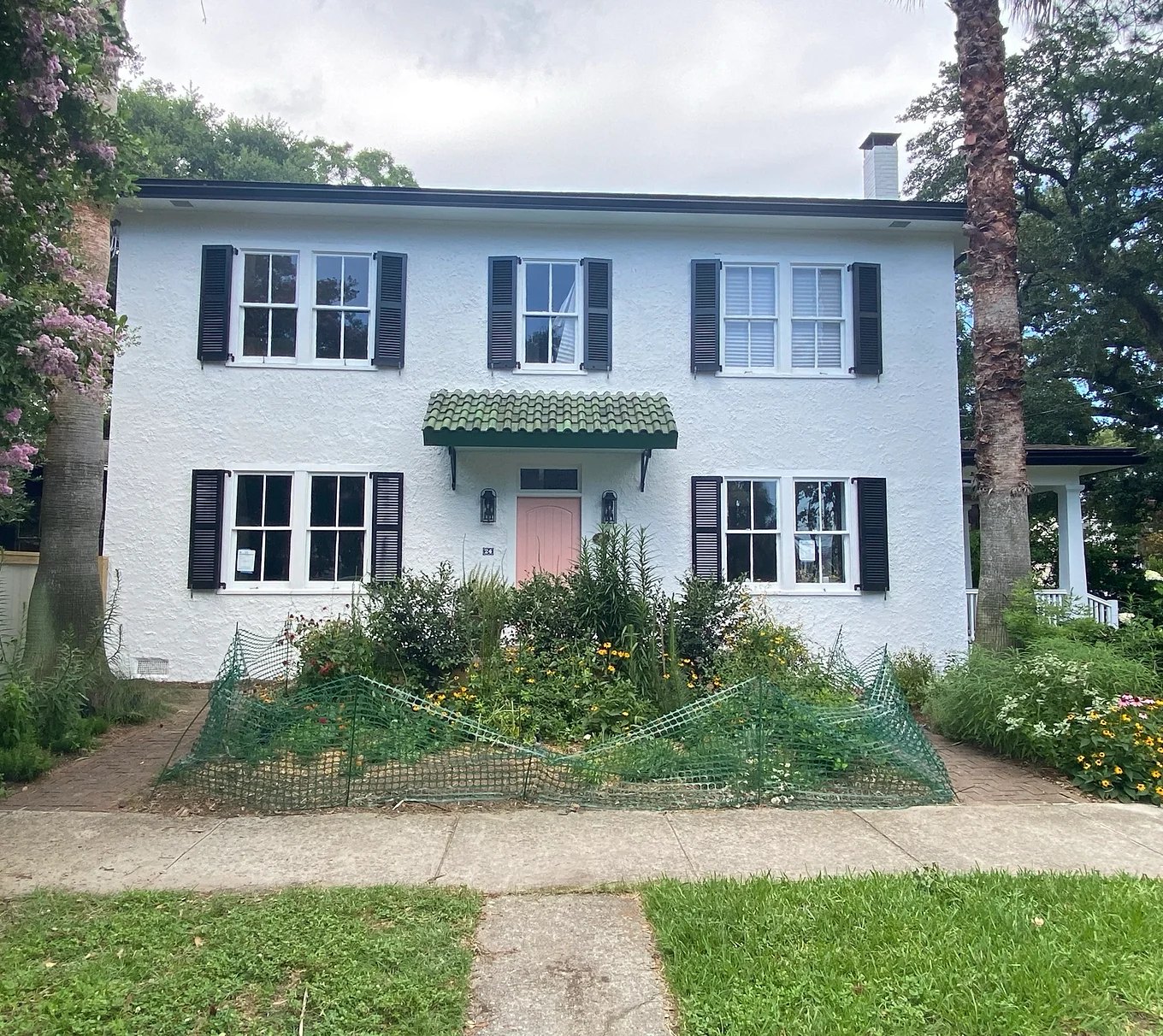
Downtown Charm is one of my published projects, an exterior repaint of an older home in downtown Charleston. The project page records the location and the work. It does not record the year the house was built, and on a house like that, the year is the first fact to pin down, because it decides how the old paint gets handled.
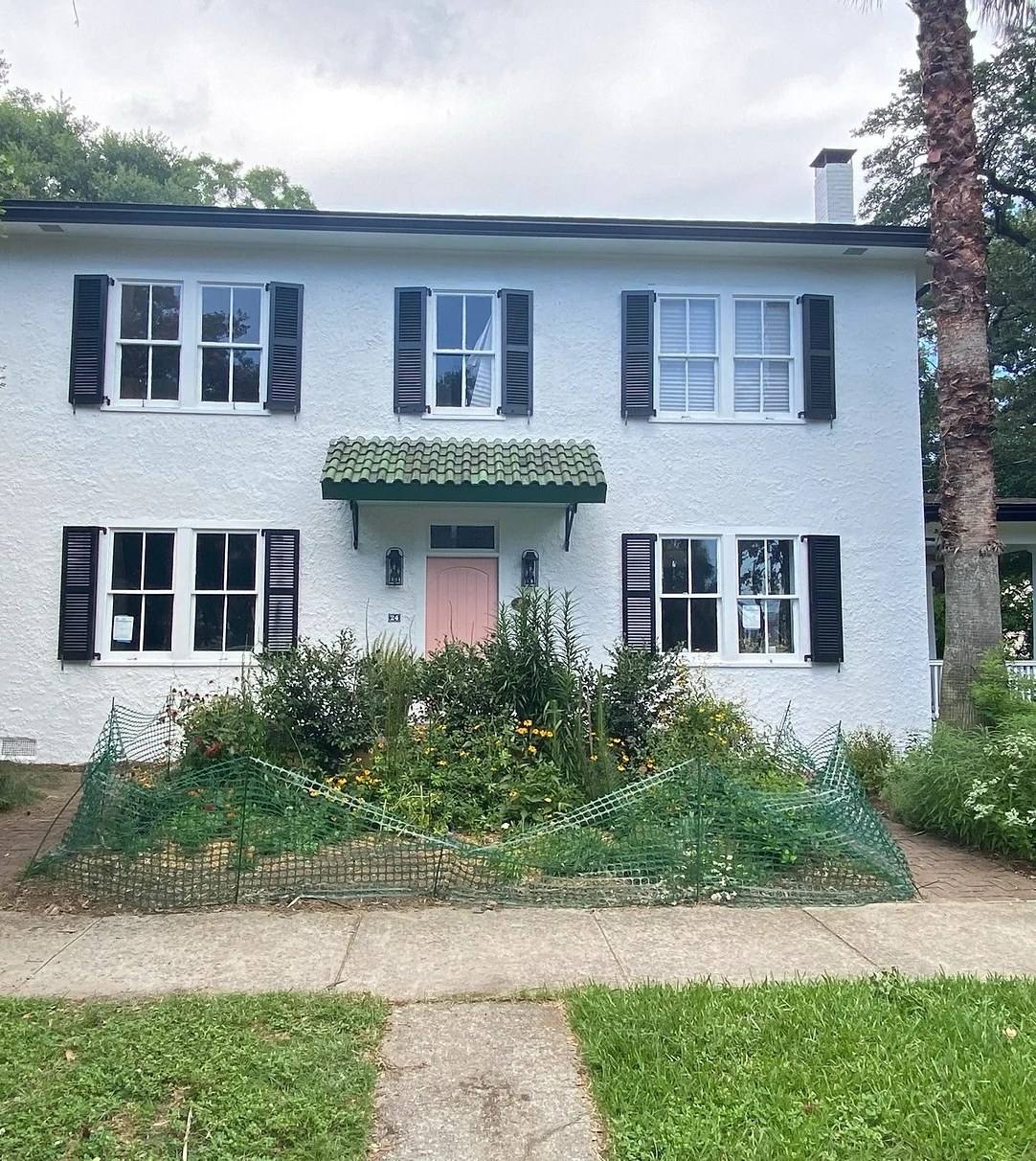
If the house is in one of the City's historic districts, there is a second layer: the City's preservation guidelines also limit how old paint can come off. My post on Board of Architectural Review approval covers that side.
The numbers in the federal rule
The renovation rule lives in 40 CFR Part 745, Subpart E. These are its figures that come up on a typical residential repaint.
| Item | Figure | Why it matters on a repaint |
|---|---|---|
| Homes covered | Built before 1978 | The rule's "target housing", with narrow exceptions |
| Lead-based paint threshold | 1.0 mg/cm² or 0.5% by weight | A test result below this takes a component out of the rule |
| Minor repair limit, inside | 6 sq ft or less per room | Above this, full lead-safe practices apply |
| Minor repair limit, outside | 20 sq ft or less | Exterior prep beyond this is covered work |
| Pamphlet to the owner | No more than 60 days before work | With a signed acknowledgment or a certificate of mailing |
| Heat gun | Below 1,100°F only | Open-flame burning is banned outright |
| Firm certification required since | 22 April 2010 | Paid firms must be EPA- or state-certified |
The minor-repair exemption only holds when none of the banned practices are used and the job does not involve replacing windows or demolishing painted surfaces. Power sanding, grinding and blasting are banned on painted surfaces unless the tool has a shroud and a HEPA vacuum attachment.
What to ask any painter before old paint comes off
Whether the firm is EPA lead-safe certified
Ask any painter whether the firm is certified, and ask to see the certificate in writing. Since 22 April 2010, firms paid to disturb paint in pre-1978 homes have had to be EPA- or state-certified, using certified renovators. The state pamphlet says a contractor who will disturb lead-based paint should show you proof of training before starting. You can also check EPA's locator yourself.
Testing the painted parts, or treating them as lead
Either can be legitimate. A firm can test components as described above, or skip testing and follow lead-safe practices throughout. Ask which one the estimate assumes, because it changes the preparation, the cleanup and the schedule.
Containment, cleanup and washing
Ask how the work area will be contained and cleaned each day, and how the final cleanup will be checked. The federal rule requires waste to be contained before it leaves the work area. On washing, EPA's lead program FAQ says pressure washing is not a prohibited practice, though the work area must be contained so nothing, wastewater included, leaves it. South Carolina's pamphlet is stricter for homeowners, telling them not to powerwash a pre-1978 home where lead is suspected. Ask the painter how they handle both. My post on soft washing vs pressure washing covers the washing side.
What clients notice: the prep
"They took time to prep the home to minimize the clean up and prevent any damage to the home."Evan K, Palmetto client, Google review
Evan's review is about scraping popcorn ceilings and painting a whole house, and it says nothing about lead. It names the part of a project homeowners see: protection, prep and cleanup. On a pre-1978 house, that same stretch of the job is where the federal rules apply.
When I come out for an estimate, put the questions in this post to me, as you would to anyone else. My estimates are free and I write the scope myself, so ask, and have the answers written into it. My guide to house painting costs in Charleston has a grid for comparing estimates line by line, lead-safe work included.
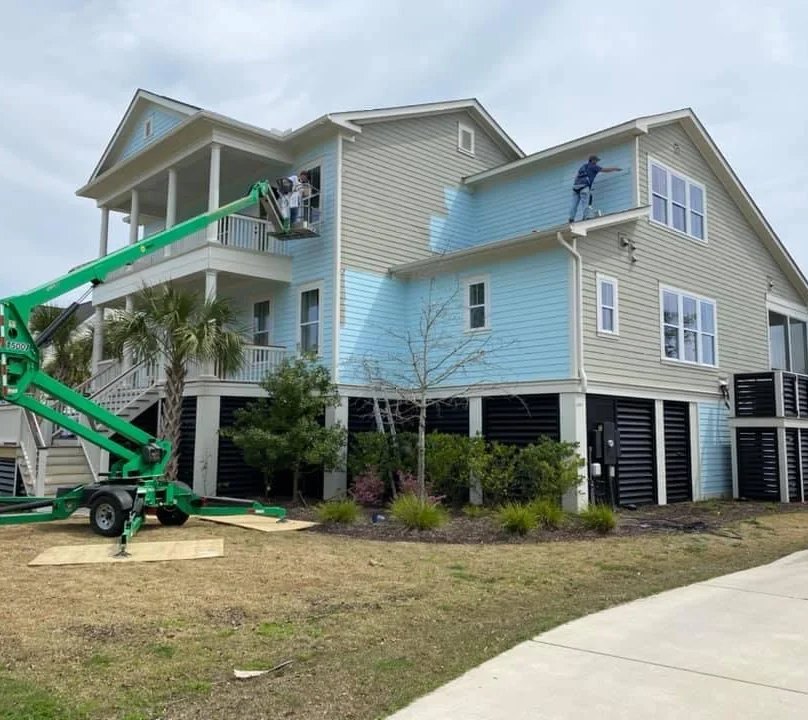
This week: find the year your house was built. If it is before 1978, decide whether you want an inspection, a risk assessment or component testing, and put that question in writing to every painter you call.
You might also be wondering
How do I test my house for lead paint?
Hire a certified lead inspector or risk assessor, who checks surfaces and gives you a written report. A certified renovator can also test the specific parts to be painted with an EPA-recognized kit or by sending paint chips to a recognized lab.
Does the EPA lead rule apply if I paint my own house?
Generally no. EPA says the renovation rule does not apply to homeowners working on their own pre-1978 homes, but it does if you rent out the home or part of it, run a childcare center there, or renovate homes to sell.
Who runs lead paint certification in South Carolina?
EPA does. South Carolina is one of the states where EPA administers the lead-based paint program directly, so you look up certified inspectors, risk assessors and abatement firms through EPA.
Are home lead test kits reliable?
South Carolina's state lead pamphlet says store-bought kits are not always reliable, can be hard to use, and often show only that lead is present. It calls a certified risk assessor the best way to find hazards.
What paperwork should a painter give me before work on a pre-1978 house?
A firm doing paid renovation work in a pre-1978 home must give the owner EPA's lead pamphlet no more than 60 days before work begins and get a signed acknowledgment or a certificate of mailing.
If your home is on the peninsula or nearby, my Charleston service area page covers where I work.
Sources
- US EPA: Reduce the risk of lead exposure at home
- eCFR: 40 CFR Part 745, Subpart E, residential property renovation (sections 745.82, 745.83, 745.84, 745.85)
- South Carolina DES (formerly DHEC): Look Out For Lead pamphlet
- US Census Bureau, American Community Survey 2024 1-year, table B25034, Charleston County
Also consulted: US EPA, Lead Renovation, Repair and Painting Program page and Program Rules page; US EPA, Questions and Answers for Homeowners and Renters about Lead Inspections, Risk Assessments and Abatements; US EPA, Lead Abatement, Inspection and Risk Assessment; 40 CFR 745.223 definitions; US EPA, Lead-Based Paint Program Frequent Questions (12 January 2026), epa.gov/system/files/documents/2026-01/508-lbp_program-fqs_1.21.2026.pdf.
01 / Keep reading
More from the notebook.
Posts and guides for Lowcountry homeowners.

Free painting quotes in Charleston and Mount PleasantTell us about the house.
A conversation, a free onsite estimate and a scope in writing. No pressure to decide on the spot.
843.998.1649 info@palmettopaintingcontractors.com