
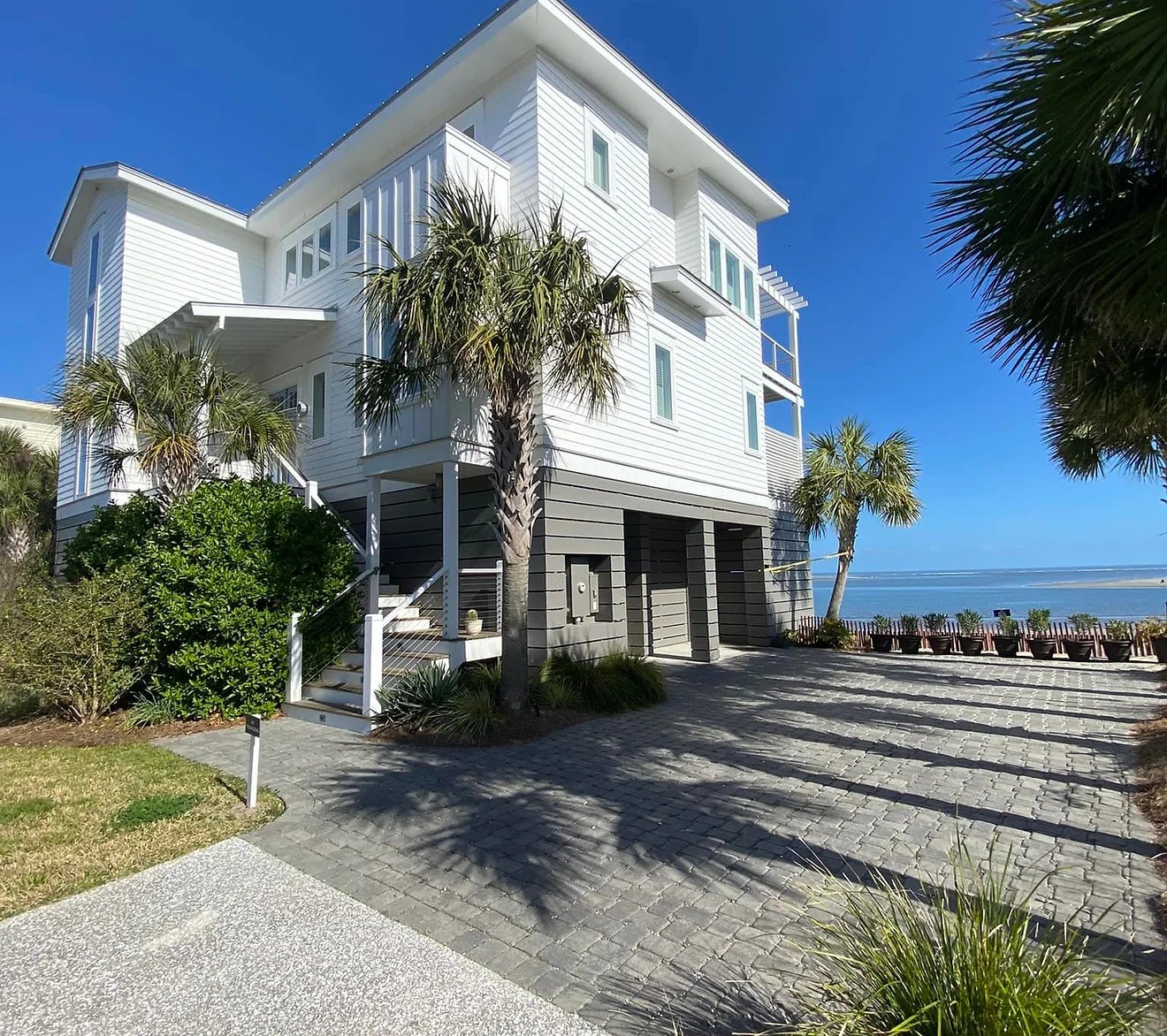
Soft wash vs pressure wash on a Charleston home, and what to leave to paver specialists
The right wash depends on the surface, and pavers are not siding. Here is where a house wash ends, what a paver maker says, and what to tell your painter about the patio.
- Belgard care guide cited
- House vs paver table
- 8 minute read
Soft wash vs pressure wash is usually framed as a contest between two machines. Beside a Charleston house the better question is what the surface in front of you can take, and who should be holding the wand. Siding, trim and wood decks are painter territory when the wash is the first step of a repaint. A paver patio or driveway is a different animal, with joints, sand and sometimes a sealer.
Palmetto has already covered washing a house before painting. This post looks at the hardscape beside the house. It uses a paver manufacturer’s own care guidance, sorts out what a painter should and should not take on, and ends with what to tell your painter about the patio before the wash and the paint begin.
Key takeaways
- Palmetto’s pressure washing is scoped to house exteriors, decks and paint preparation. Paver cleaning, joint sand and sealing sit with a paver specialist.
- Belgard cautions that the force of a power washer can expose the aggregate under a paver’s surface, and says a stiff brush is often the better option.
- Belgard advises waiting at least 30 days after installation before sealing, so any efflorescence can be removed first.
- Belgard calls the joints between pavers the most vulnerable part of an installation and says to keep them topped off with jointing sand.
- Tell your painter where pavers meet the walls, whether they are sealed and where the plantings are, so the wash and the paint are planned around them.
The patio next to the walls
Palmetto’s pressure washing is scoped to house exteriors, decks and preparation for painting, so a paver patio or driveway sits outside it. For a house or rental you own or manage in the Charlotte / Lake Norman area, roughly 200 miles away, there is paver cleaning and sealing from Carolina Custom Stone and Hardscape, an independent hardscape contractor in that market. The page describes deep cleaning, re-sanding the joints with polymeric sand and a breathable sealer applied once the pavers are dry. That is a pointer for property up there. In Charleston, look for a paver specialist who works here.
For the paver side itself, a manufacturer is a fair authority. Belgard’s hardscape care guide recommends cleaning with a coarse-bristle broom and a paver cleaner each spring, warns that the force of a power washer can expose the aggregate under the paver’s surface, and says to test any cleaning solution on a small inconspicuous area first. Its how-to on cleaning pavers adds that a stiff brush and some elbow grease is often a better option than a pressure washer, and that the settings matter if you do use one.
House washing and paver care, side by side
| Surface beside the house | Care guidance | Usually handled by |
|---|---|---|
| Painted siding and trim | Low pressure with a cleaner, then a gentle rinse | The painter, as preparation |
| A wood deck | Low pressure and a deck cleaner | The painter, when staining or painting follows |
| Concrete pavers, routine cleaning | Coarse broom and paver cleaner each spring; a stiff brush often beats a pressure washer (Belgard) | The owner or a paver specialist |
| Paver joints | Keep the joints topped off with jointing sand so the bedding layer below does not deteriorate (Belgard) | A paver specialist |
| Sealing pavers | Wait at least 30 days after installation, and no more than one application in three years (Belgard) | A paver specialist |
| Oil spills on pavers | Soak up with granular absorbent, do not rub (Belgard) | The owner |
What a hard wash can do to pavers
The concern is physical. Paver faces are made of concrete with an aggregate just under the surface, and Belgard’s point is that the force of a strong jet can expose it. The joints are the other weak point. Belgard calls them the most vulnerable areas of any installation and says to keep them topped off with jointing sand, because losing the sand lets the bedding layer deteriorate and the pavers shift. A wash that empties the joints is therefore a maintenance job created, not just a cleaning job done, and refilling them is a paver specialist’s task rather than an add-on to a house wash.
Cleaning solutions are the other trap. Belgard’s how-to says concrete pavers need different solutions from porcelain ones, that high concentrations of vinegar could damage some paving materials, and that a solution applied to dry pavers could damage them, so the surface is wet first and rinsed after. Those are product decisions for someone who knows the paver, which is one more reason the patio does not belong in a house-wash scope.
What a painter should and should not take on
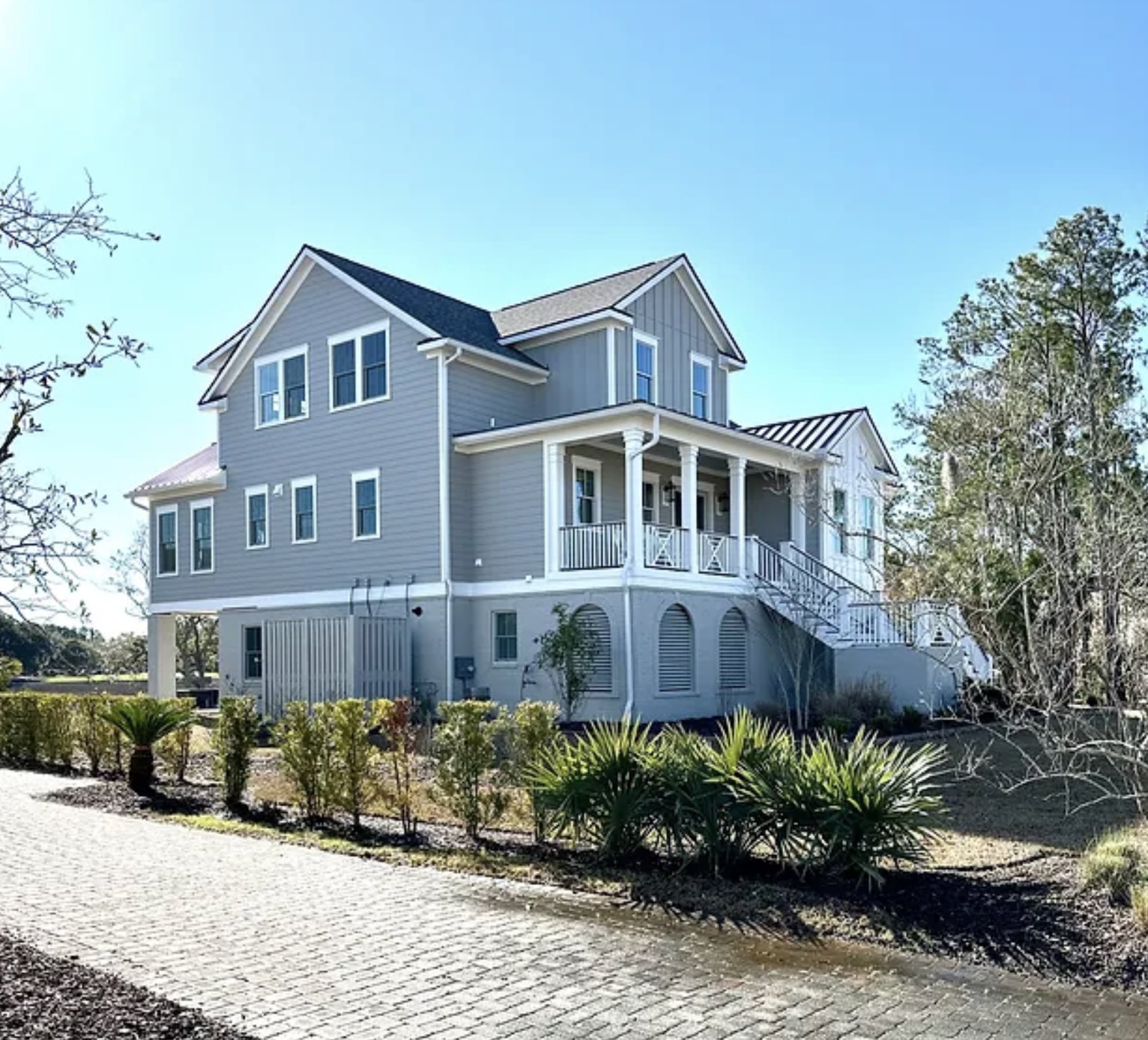
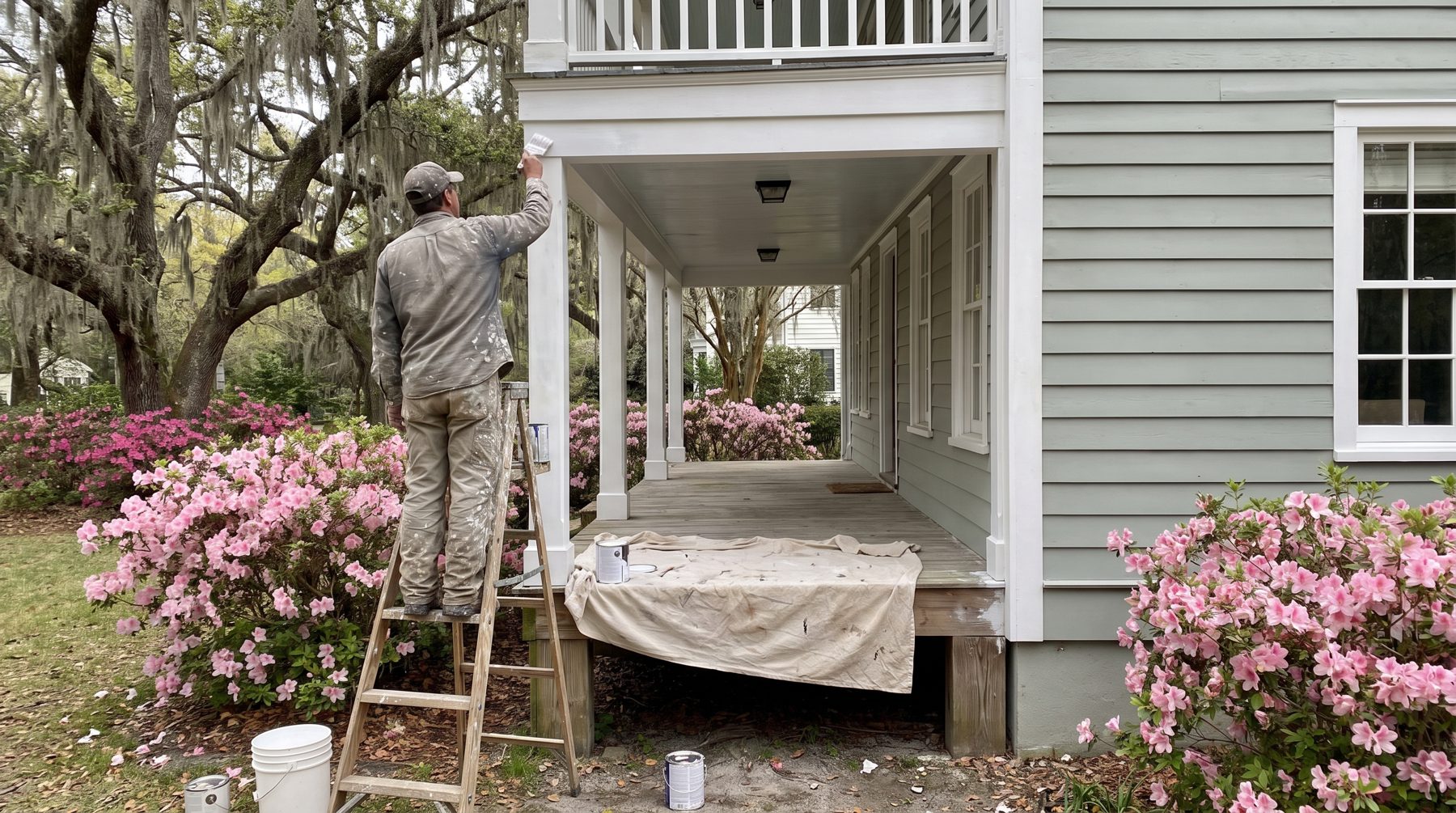
A painter can sensibly wash the house and deck as preparation, protect the patio during the work and point out pavers that look unsound beside the walls. A painter should not be asked to clean and seal the paver field, refill the joints or choose a sealer, because those decisions need product knowledge and a schedule of their own. A good estimate states the boundary in plain words, for example that the wash and the paint stop at the paver edge.
Sealing runs on its own schedule
Belgard advises waiting at least 30 days to seal new pavers so that any efflorescence, the white bloom that can appear after installation, can be removed first. It also warns that sealers should not go on more than once in three years, to a maximum of two applications, because too many create a film that may discolor in sunlight. Humid Charleston summers add a practical wrinkle: NOAA-derived humidity in Palmetto’s best-time post runs 75% to 78% from June through September, so surfaces dry slowly, and the sealer label decides how dry is dry enough. That timing belongs to the paver specialist, not to the painter’s schedule.
Questions to ask a paver specialist
- Which cleaner is made for my type of paver, concrete or porcelain, and will you test it on a small area first?
- How will you clean without exposing the aggregate, and will a brush do the job?
- Will the joints be topped off with jointing sand afterward, and with what?
- How long since the pavers were installed, and has any efflorescence shown up?
- Which sealer, how many coats are already on the surface, and what do the label’s dry and cure times say?
What to tell your painter about the patio
A house wash and a repaint happen right beside hardscape, and a few details let the painter plan for it. Mention them at the estimate:
- Where pavers, walkways and driveways meet the walls, so wash water and paint can be kept off the joints.
- Whether the pavers are sealed, when, and whether they were installed recently.
- Where the plantings and lawn sit, so cleaners and runoff are directed away from them.
- Whether the patio will be in use during the work, so furniture can be moved and drop cloths laid ahead of the first coat.
- Any oil stains you already know about, since Belgard says spills should be soaked up rather than rubbed.
None of this changes the scope of a paint job. It keeps the hardscape from becoming collateral damage. Palmetto’s exterior repaint planning guide puts access and landscaping in its checklist for the same reason.
Pressure washing with Palmetto
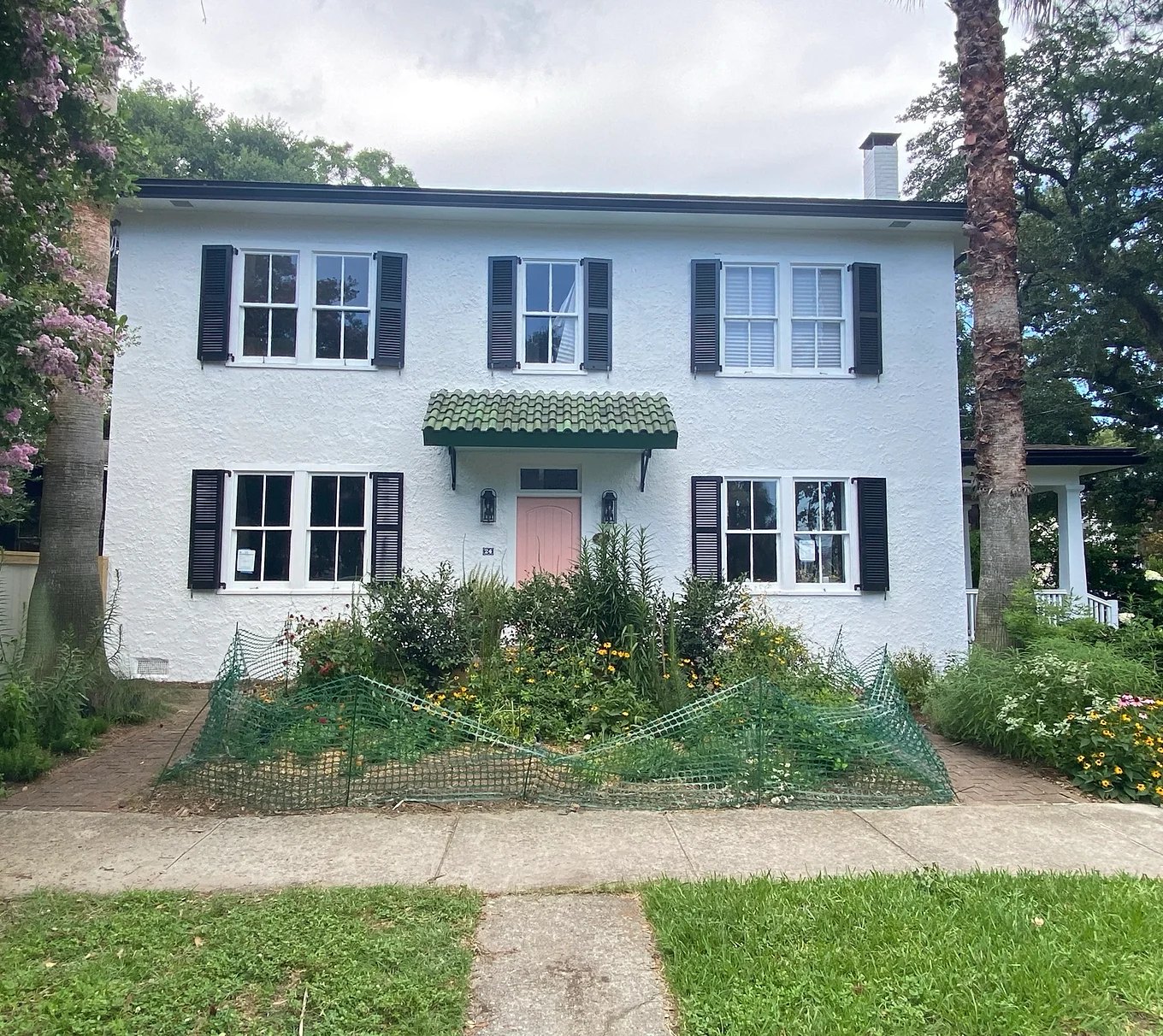
Palmetto offers pressure washing for home exteriors, decks and paint preparation, and the pressure and method for each surface are part of the scope conversation with Greg Bores. Tell Greg your location, the surfaces you want cleaned and any worn coatings or delicate areas you are concerned about, and mention whether staining or painting will follow. Ask separately about anything beyond the house exterior or deck instead of assuming it is included. See a beachfront exterior repaint in Coastal Charm, or request a free quote.
Questions
Is a pressure washer a bad idea on pavers?
It can be if it is used carelessly. Belgard warns that the force of the spray can expose the aggregate under the paver’s surface and says a stiff brush is often a better option. If you do use one, be careful with the settings and read the instructions first.
Will washing my patio empty the joints?
It can disturb them. Belgard calls the joints the most vulnerable part of an installation and says to keep them topped off with jointing sand, so plan to check the joints after any wash and refill them where needed.
How soon after installation can pavers be sealed?
Belgard advises waiting at least 30 days, so any efflorescence that appears after installation can be removed first. Follow the sealer’s label for dry and cure times.
Soft wash or pressure wash for the house itself?
It depends on the surface. Painted wood siding and trim generally take low pressure with a cleaner and a gentle rinse, and Palmetto picks the method for each surface during the estimate. Pavers beside the house are a separate question for a paver specialist.
Does Palmetto clean or seal pavers?
Palmetto’s pressure washing covers house exteriors, decks and paint preparation. Paver cleaning, joint sand and sealing are not on the service pages, so use a paver specialist for them.
Sources
The humidity range is the derived NOAA figure from Palmetto’s best-time post. Both Belgard pages were fetched and read on 27 October 2026.
01 / Keep reading
More from the notebook.
Posts and guides for Lowcountry homeowners.

Free painting quotes in Charleston and Mount PleasantTell us about the house.
A conversation, a free onsite estimate and a scope in writing. No pressure to decide on the spot.
843.998.1649 info@palmettopaintingcontractors.com