
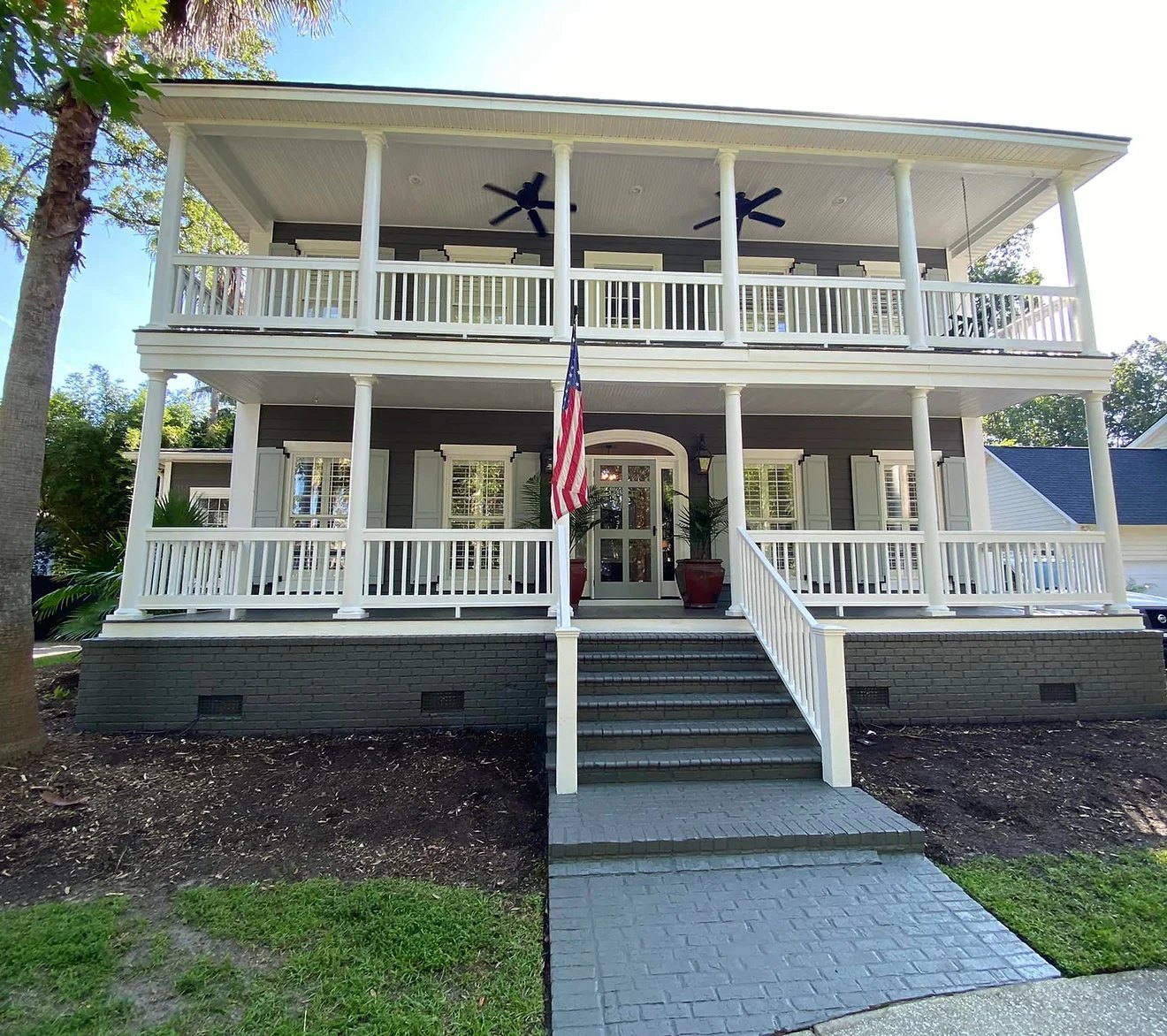
When to stain a new deck in Charleston: drying time, moisture and opacity
New wood needs time before it will take stain. Test it instead of trusting the calendar, then decide how much of the grain you want to see.
- Southern pine trade guidance cited
- Charleston calendar table
- 8 minute read
A new deck looks ready the day the last board goes down. The wood often is not. Guidance from the Southern Forest Products Association, which covers pressure-treated southern pine, ties the wait to two things: how the lumber was dried and what you plan to put on it. A semi-transparent stain and a paint-like solid stain follow very different timetables.
This post starts with that guidance and then does what a Charleston homeowner actually needs: it lays the waits against the local calendar, using NOAA’s normals, so you can see which month your deck will be ready in. It then covers a simple water test, how opacity changes the look, and how a new fence fits in. It is planning advice, not a product specification. The label on your stain always governs.
Key takeaways
- The Southern Forest Products Association says wood sold wet should dry before finishing, and wood re-dried after treatment can be coated right away.
- On standard treated wood, it advises about 30 days before an oil-based semi-transparent stain and at least six months before paint or solid-color stain.
- A splash test on a dry surface settles it: beading on a new deck means the lumber is not yet dry enough to take a finish.
- In Charleston the calendar matters as much as the lumber. June through September are the wettest months, and October is mild and drier.
- Palmetto’s service pages list deck staining and painting. Ask Greg about a fence separately.
What the lumber and the finish decide
The Southern Forest Products Association’s deck finishing guidance makes the wait depend on what you bought and what you are applying. Pressure-treated southern pine sold wet, meaning it was not re-dried after treatment, should dry before it is finished, and how long that takes depends on the product and the climate. On standard treated wood, it recommends about 30 days before an oil-based semi-transparent stain. Solid-color stains form a film just as paint does, so they follow the same rule as paint: at least six months. Wood that was re-dried after treatment can be coated immediately.
A fence is a separate question from a deck, and Palmetto’s service pages list deck staining and painting rather than fence work. If your other house or rental sits around Lake Norman, about 200 miles up the road in North Carolina, Carolina Fencing Solutions has an article on wood fence installation around Lake Norman. The firm is an independent contractor that installs wood fences in Huntersville, Cornelius, Davidson and Mooresville, and the article covers pine versus cedar, which fence parts need lumber rated for ground contact and when to stain a new fence. It is reading for that market, not advice for a fence in Charleston.
The splash test, and why it beats the calendar
Lumber varies, so the guidance ends with a test rather than a date, the splash test that homeowners often call the water drop test. Make sure the surface is thoroughly dry, then pour water on it and watch. On a new deck, droplets that form mean the lumber is not yet dry enough to take a finish. Water that soaks in means it is time for a sealer or stain. The same test works in reverse on an older deck: beading there means the existing finish is still doing its job.
- Test on a dry day, after the surface has had time to dry.
- Pour water on several boards, including some in full sun and some in shade.
- Treat the slowest board as the schedule. A shaded corner near plantings is usually the last to dry.
- Let the stain label have the last word on temperature and conditions.
Charleston’s calendar: when 30 days and six months land
Here the local climate becomes the core of the plan. SFPA notes that the flat surfaces of a deck face direct sun and collect moisture, so weathering is greatly accelerated. In Charleston the moisture side of that sentence is a matter of record. NOAA’s 1991 to 2020 normals, which Palmetto’s best-time-to-paint post uses, show April and October as the mildest months, November as the driest, and June through September at more than six inches of rain a month, with hurricane season running from 1 June to 30 November.
| Deck finished in | About 30 days later | At least six months later | What the normals say for those two months |
|---|---|---|---|
| Early March | Early April | Early September | April: 3.29 inches of rain, high 77.1°F. September: 6.01 inches, high 85.4°F, in hurricane season |
| Early June | Early July | Early December | July: 6.60 inches, high 91.3°F. December: 3.35 inches, high 62.7°F |
| Early September | Early October | Early March | October: 4.33 inches, high 77.9°F. March: 3.35 inches, high 70.1°F |
| Early December | Early January | Early June | January: 3.37 inches, high 60.2°F, low 38.9°F. June: 6.21 inches, high 88.5°F |
Read across a row and the pattern shows. A deck finished in early September reaches its semi-transparent window in October, one of the two mildest months. A deck finished in June reaches it in July, the wettest stretch of the year, so the test may pass but the forecast may not. Winter builds bring cold mornings, so check the label’s minimum temperature against January’s average low of 38.9°F. Paint and solid-color stain are the long game: a six-month wait from March lands in September, a semi-transparent finish is the practical choice for decking boards, which is SFPA’s own advice when you want color.
A clear water repellent while you wait
SFPA recommends, at a minimum, a clear water-repellent coating on decking boards, and notes that most water-repellent instructions call for application right away. It suggests reapplying it every year or two and applying one as soon as possible to protect the project from moisture damage. That makes a repellent a possible bridge while a semi-transparent stain waits for the wood to dry, though the product label decides whether a stain can follow it and when.
How much grain do you want to see?
Opacity describes how much the finish covers the wood’s appearance. SFPA says semi-transparent stains show the grain, while solid-color stains hide it, and that paint and solid-color stains are not recommended for decking boards or stair treads because they show wear on frequently used pathways. Palmetto’s guide to deck stain opacity draws on Benjamin Moore’s stain guide and walks through the same trade-offs. The same color name can look different on different wood, so look at a sample on the actual boards.
| If you lean toward | What you see | Worth asking |
|---|---|---|
| A more transparent stain | More of the wood’s own grain and color | What is on the deck now, and how it limits the options |
| A more opaque stain | More uniform color and less visible grain | Whether it suits the existing surface and what preparation it needs |
| A solid painted finish | Color that covers the grain | Switching between stain and paint can change preparation needs |
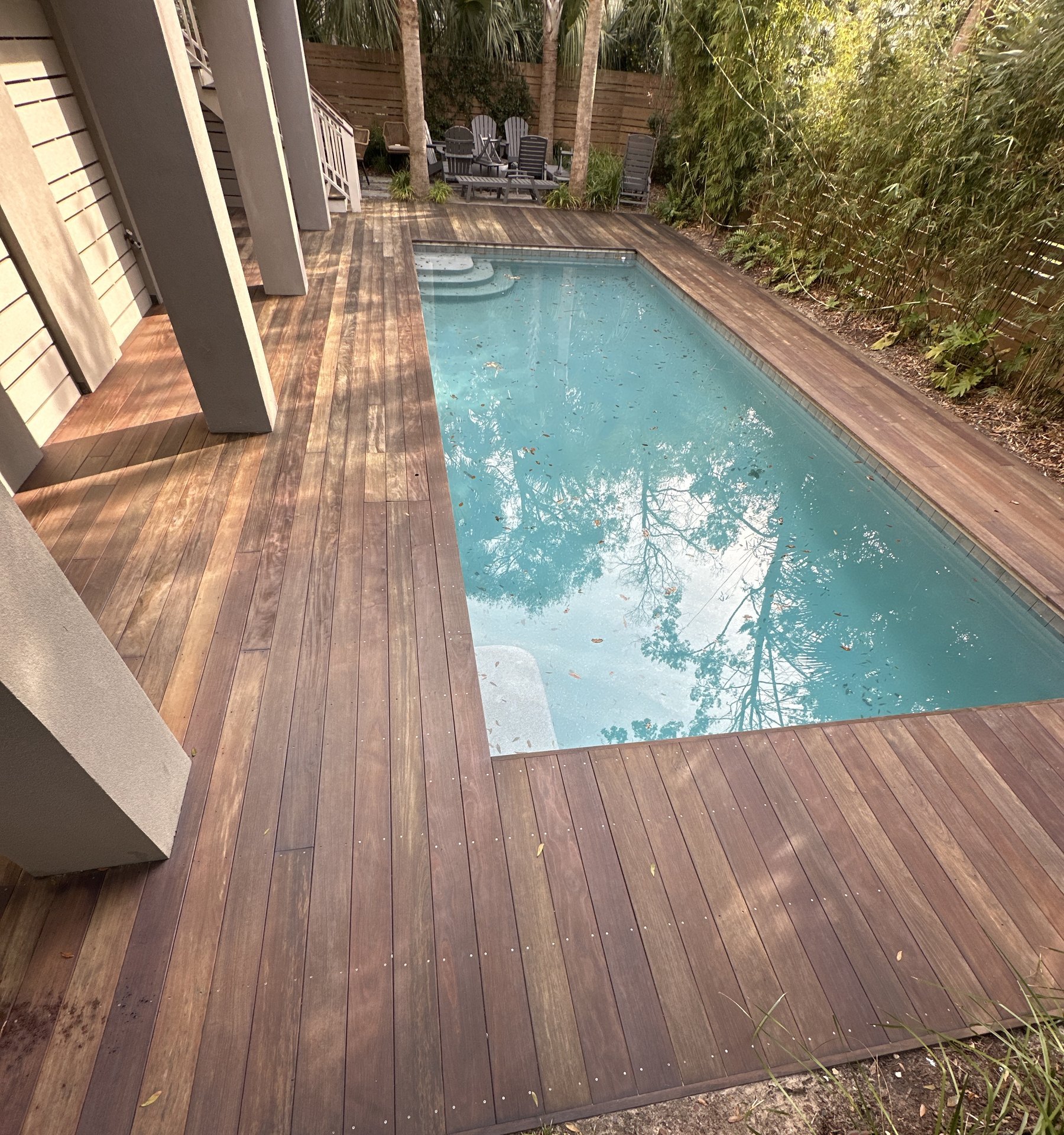
Cleaning, old finishes and a fence
A brand-new deck needs sweeping. An older deck needs more. Palmetto’s pressure washing service covers decks as well as house exteriors, and the right pressure for wood is low: Palmetto’s soft wash post lists decks as a low-pressure, deck cleaner job, with furred, splintered boards as the risk. If the deck already has a finish, say what you know about it, because a worn transparent stain and an opaque coating are different starting points. On a fence, the same two questions apply: is the wood dry enough, and how much grain do you want to keep. List every part you want included and keep repairs separate from coating. As Palmetto’s deck guide puts it, a coating does not replace a damaged board or make an unsafe component sound.
Staining a deck with Palmetto
Greg Bores handles the estimate, the scope and the work on site. Tell him what you know about the wood and any earlier finish, which boards, rails, posts and steps you want included and when the deck was built. Ask him about drying, weather and when furniture and foot traffic can return. The Daniel Island Revamp includes porch and deck surfaces, with Kendall Charcoal on concrete and decks. When you are ready, request a free quote.
Questions
Is it too soon to stain a deck I built last month?
It depends on the lumber and the finish. The Southern Forest Products Association says wood sold wet should dry first and recommends about 30 days before an oil-based semi-transparent stain on standard treated wood. A splash test tells you whether your boards are ready.
Which finish waits longest on new treated wood?
Paint and solid-color stain. SFPA recommends at least six months for standard treated wood, because these finishes form a film. A semi-transparent oil-based stain waits about 30 days, and a clear water repellent can go on right away.
What does water beading on the boards mean?
On a new deck, beading means the lumber is not yet dry enough to take a finish, according to SFPA. On an older deck it means the existing finish is still working, so the deck is not due for refinishing.
When in the year should a Charleston deck be stained?
NOAA’s normals show April and October as the mildest months and November as the driest, while June through September are the wettest. Match that calendar to the waits above and check the stain label for temperature limits.
Will Palmetto stain my fence?
Palmetto’s service pages list deck staining and painting. Ask Greg about a fence separately and describe the surfaces you have in mind.
Sources
Monthly rain, highs and lows are the NOAA Charleston Intl Airport normals also used in Palmetto’s best-time post. The SFPA page was fetched and read on 27 October 2026.
01 / Keep reading
More from the notebook.
Posts and guides for Lowcountry homeowners.


Free painting quotes in Charleston and Mount PleasantTell us about the house.
A conversation, a free onsite estimate and a scope in writing. No pressure to decide on the spot.
843.998.1649 info@palmettopaintingcontractors.com