

Painting walls around a finished garage or basement floor: the order of work
Walls, ceiling and floor all want the same room at different times. The order you choose decides how much dust, masking and rework you get.
- Coating data sheet cited
- Data-sheet checklist table
- 8 minute read
From a painter’s side of the room, a concrete floor that is finished, or about to be, changes how the job runs. The floor is not Greg’s to touch, but it sets the days the room is free, the places drips can land and the way ladders move. The question “which goes first” is really three questions about dust, protection and timing.
This post comes at it the way a painter has to. It reads one manufacturer’s coating data sheet for the conditions the floor side needs, then sorts the answer by the three situations homeowners actually face: the floor is already done, the walls are done first, or both trades want the same week. The sheet is an example. Your floor contractor’s product and plan decide the details.
Key takeaways
- A floor coating’s data sheet sets conditions for the slab, the weather and the traffic that follows, and those conditions move the date a room is free for painting.
- If the floor is finished first, the painter’s job is protection: covering, ladder routes and a clear answer on who handles a drip.
- If the walls come first, the floor contractor’s prep method matters: grinding makes dust and a wet etch splashes the base of the walls.
- When both trades share a week, agree the order, the cure time and a spare day in writing before either starts.
- Palmetto’s service pages list painting, not floor work. Ask a floor contractor about coating, grinding or polishing.
The painter’s view of a floor that is not his to touch
Palmetto’s service pages list painting, not floor work. Greg Bores paints interior walls, ceilings, trim and doors, and the floor belongs to someone else, whether that is a coating contractor, a polishing contractor or the homeowner. That makes the painter’s job around a finished floor about three things: protecting it, scheduling around it and saying plainly who is responsible if something lands on it. It helps to ask the floor contractor for the product sheet early. The three things a painter needs from it are the cure date, the traffic hold and the weather window.
A polished floor is one way to finish a slab without a coating. Readers who also have a house or rental in the Charlotte / Lake Norman area, about 200 miles from Charleston, can look at polished concrete floors from Carolina Custom Concrete, an independent concrete contractor in that market. Its page describes mechanically ground, densified floors for garages, basements and workshops, where the finish is the slab itself rather than a coating laid over it, and it sets polishing beside epoxy and metallic coatings. It is there for readers with property in that area. A Charleston floor needs a contractor who works here.
What a floor-coating data sheet asks of the room
Rust-Oleum’s EpoxyShield garage floor coating data sheet covers concrete garage floors in good, sound condition that are free of curing agents and sealers. It is one product, so read it as an example of how a coating maker sets conditions. The table translates its main points into what a painter will notice on site.
| What the sheet requires | What the painter will notice | What to arrange |
|---|---|---|
| Newly poured concrete cures for a minimum of 28 days, and a taped plastic sheet left for 24 hours shows whether moisture is coming through the slab | The floor date can slip, and the room’s free days slip with it | Ask the floor contractor for a date range, not a single date |
| Sealer must be removed (water that beads on the floor means one is present) and poorly bonded paint must be removed | Removal makes dust, and old paint can release lead dust | Settle dust-making work before wall finish coats go on |
| Air, material and surface temperatures of 60 to 85°F, surface at least 5°F above the dew point, humidity no higher than 85% | Humid days narrow the window, so a booked day can move on the morning | Keep a spare day in the plan |
| Light foot traffic after 12 to 16 hours, heavy items and normal foot traffic after 24 to 48 hours, vehicles and full cure after 3 days, at 70°F and 50% humidity | The room is closed to ladders, furniture and cars while the floor sets | Hold touch-ups and furniture moves until the label allows |
Charleston’s dew points sit near 70°F from June through September in the NOAA normals behind Palmetto’s best-time post, so the 5°F margin deserves a reading on the day rather than a guess. It is the same surface-and-dew-point rule that governs exterior paint, applied to a slab.
If the floor is finished before the painter arrives
Then the order question becomes a protection question. Tell the painter what the floor is and when it was applied, so the cure time is respected. Ask how it will be covered, how ladders and equipment will cross it and who is responsible for a drip. The data sheet gives a reason to be strict: it says to clean up drips and spatters of the coating immediately with water, because dried product is very difficult to remove. The same principle covers a finished floor of any kind. Protect it before the first drip, not after, and treat the cost of covering as part of the painting scope.
A polished or ground slab is a different case from a coated one. Carolina Custom Concrete’s page describes polishing as a mechanical process with no added layer, so there is no film to peel, but a finished slab can still be marked by a drip or a scrape, so the same covering rule applies.
If the walls come first
A floor contractor will cut the coating in along the wall with a brush, according to the sheet, which is easier against finished walls. The floor prep can still touch them. Grinding throws dust before finish coats are cured, and a wet etch, as some coating kits specify, sends rinse water and splash to the base of the walls. Settle in writing whether the last coat on the wall base waits until the floor prep is done, and how the finished walls will be masked. Painters and floor contractors do not always agree on the exact order, so make the agreement before either starts.
If both trades want the same week
A short call between the two trades before either estimate is signed is a cheap safeguard. These are the points to settle on it.
- Who goes first? Agree the order and put it in writing.
- What is the floor prep method? Grinding, a wet etch or a simple clean changes what the walls have to survive.
- How long is the cure? Use the product’s sheet, not a rule of thumb, and plan the room’s return date from it.
- What is the weather plan? The sheet’s temperature, dew point and humidity limits can move the day.
- Where is the spare day? A floor that misses its window moves everything behind it.
Older paint on garage walls
If the garage walls carry older paint, scraping and sanding can create lead dust. The data sheet carries its own lead warning for removing old paint, and for paid work in a house built before 1978 the EPA’s lead-safe rule applies when more than six square feet of interior paint is disturbed. Ask any painter how that will be handled before the estimate is signed.
Planning the painting side with Palmetto
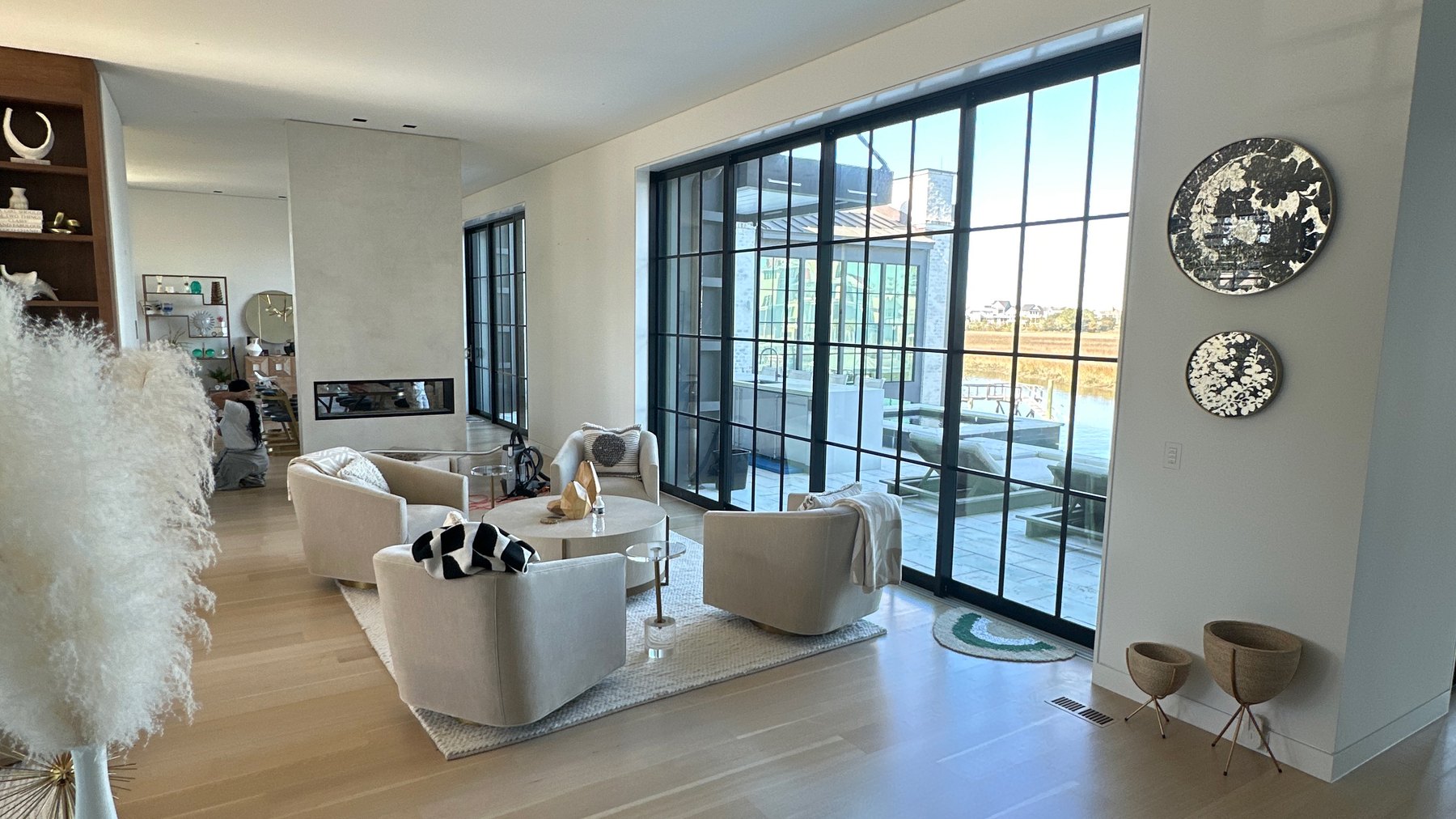
Greg Bores starts with an onsite estimate. Tell him what is on the floor now or planned, when the floor work is scheduled and which walls, ceilings, trim and doors you want included. Palmetto’s interior finishes guide helps with the sheen decision for interior walls. See interior and exterior work in Wild Dunes Estate, read about house painting in Mount Pleasant or request a free quote.
Questions
Which goes first, the wall paint or the floor coating?
There is no single rule. In many projects the coating goes last because drips fall downward, but grinding dust and a wet etch can reverse that. Agree the order, the prep method and the cure time with both trades in writing.
How long until furniture and cars come back to a new epoxy floor?
It depends on the product. One manufacturer’s data sheet gives 12 to 16 hours for light foot traffic, 24 to 48 hours before heavy items and 3 days for vehicles and full cure, at 70°F and 50% humidity. Cooler or more humid conditions take longer, so follow your product’s label.
What does a floor coating need from the slab?
The Rust-Oleum sheet describes concrete in good, sound condition that is free of sealers and curing agents, cured for the stated time and dry, with no moisture coming through. Your floor contractor’s product may set different conditions.
Does Palmetto handle the floor as well as the walls?
Palmetto’s service pages list painting, not floor work. Ask a floor contractor about coating, grinding or polishing, and ask Greg about the walls, ceilings, trim and doors.
What is the difference between polished concrete and an epoxy floor?
Carolina Custom Concrete’s page explains that polishing refines the slab itself with diamond tooling, so there is no added layer, while an epoxy or metallic coating adds a new surface over the concrete. The condition of the slab usually decides which suits.
Sources
The dew point comes from the NOAA normals in Palmetto’s best-time post, and the EPA lead-safe threshold from its cost post. The data sheet is revision 050418, so check the current sheet for your own product. It was fetched and read on 27 October 2026.
01 / Keep reading
More from the notebook.
Posts and guides for Lowcountry homeowners.

Free painting quotes in Charleston and Mount PleasantTell us about the house.
A conversation, a free onsite estimate and a scope in writing. No pressure to decide on the spot.
843.998.1649 info@palmettopaintingcontractors.com