
Why exterior paint peels on Charleston homes: moisture, grade and gutters
Peeling paint is a symptom. On a Lowcountry house the cause is usually water with nowhere to go. Here is how to trace it, and what to settle before anyone repaints.
- National Park Service guidance cited
- Charleston climate table
- 8 minute read
When exterior paint starts peeling on a Charleston house, the paint is usually the messenger. The National Park Service’s Preservation Brief on exterior paint problems says peeling to bare wood is most often caused by excess moisture collecting behind the paint film. A fresh coat laid over the same moisture tends to fail in the same places.
Charleston supplies a lot of moisture. Palmetto’s post on the best time to paint a Charleston exterior puts August at almost seven inches of rain in NOAA’s 1991 to 2020 normals, and the humid, shaded corners of a coastal house stay damp long after the rain stops. This post sorts out what the Lowcountry adds to the problem, where on the house peeling tends to show, and where the work stops being painting and becomes drainage.
Key takeaways
- The National Park Service says peeling to bare wood is most often caused by excess moisture collecting behind the paint film.
- Charleston’s humid summers and its rain-heavy June to September stretch put extra load on gutters, grade and shaded walls.
- The usual culprits are leaking gutters, faulty flashing, failed caulk, defective shingles, cracks in siding and shrubs growing against painted wood.
- Regrading, burying downspouts and French drains belong to a drainage contractor, not a painter.
- Ask any repaint estimate to name the peeling areas, the likely cause, the preparation included and the repairs left out.
Two jobs on one wet house
Palmetto paints. Greg Bores paints houses in Charleston, Mount Pleasant and the islands, and a house with peeling paint often needs a second trade before the painting can last: regrading, buried downspouts or a French drain are a drainage contractor’s work. If you also keep a house or rental in the Charlotte / Lake Norman area, roughly 200 miles from Charleston, French drain installation in Charlotte, NC is the page that Outdoor Custom Hardscapes, an independent contractor there, publishes for that kind of work. It describes grading, gutters and downspout routing planned together with the drain. Treat it as a pointer for property in that market only. For a Charleston house, ask a drainage contractor who works here.
The National Park Service’s Preservation Brief on exterior paint problems was written for historic woodwork, but its list of exterior moisture sources fits any wood siding: faulty flashing, leaking gutters, defective roof shingles, cracks and holes in siding and trim, deteriorated caulking and shrubbery growing too close to painted wood. It warns that new paint over an unsolved moisture problem will simply fail, and that moisture left alone can permanently damage the wood itself.
What the Lowcountry adds
Peeling is not unique to Charleston, but the local climate raises the stakes. The table pairs local conditions with figures and guidance already used in Palmetto’s other posts.
| Charleston factor | What the numbers say | What it can mean for the paint |
|---|---|---|
| Humid summers | Relative humidity, derived from NOAA hourly normals, is 75% in June and 77% to 78% from July to September, with dew points near 70°F | Walls dry slowly, so swelling and mildew have more time to work |
| Rain-heavy months | June through September each average more than 6 inches of rain, and August averages 6.97 | Gutters, downspouts and the ground at the base of the wall get their hardest test |
| Salt air and sun | Sherwin-Williams and the USDA both put a good repaint interval at roughly 7 to 10 years, and salt air, full sun on south and west walls and mildew shorten it on the coast | A coating near the end of its life fails first where water already lingers |
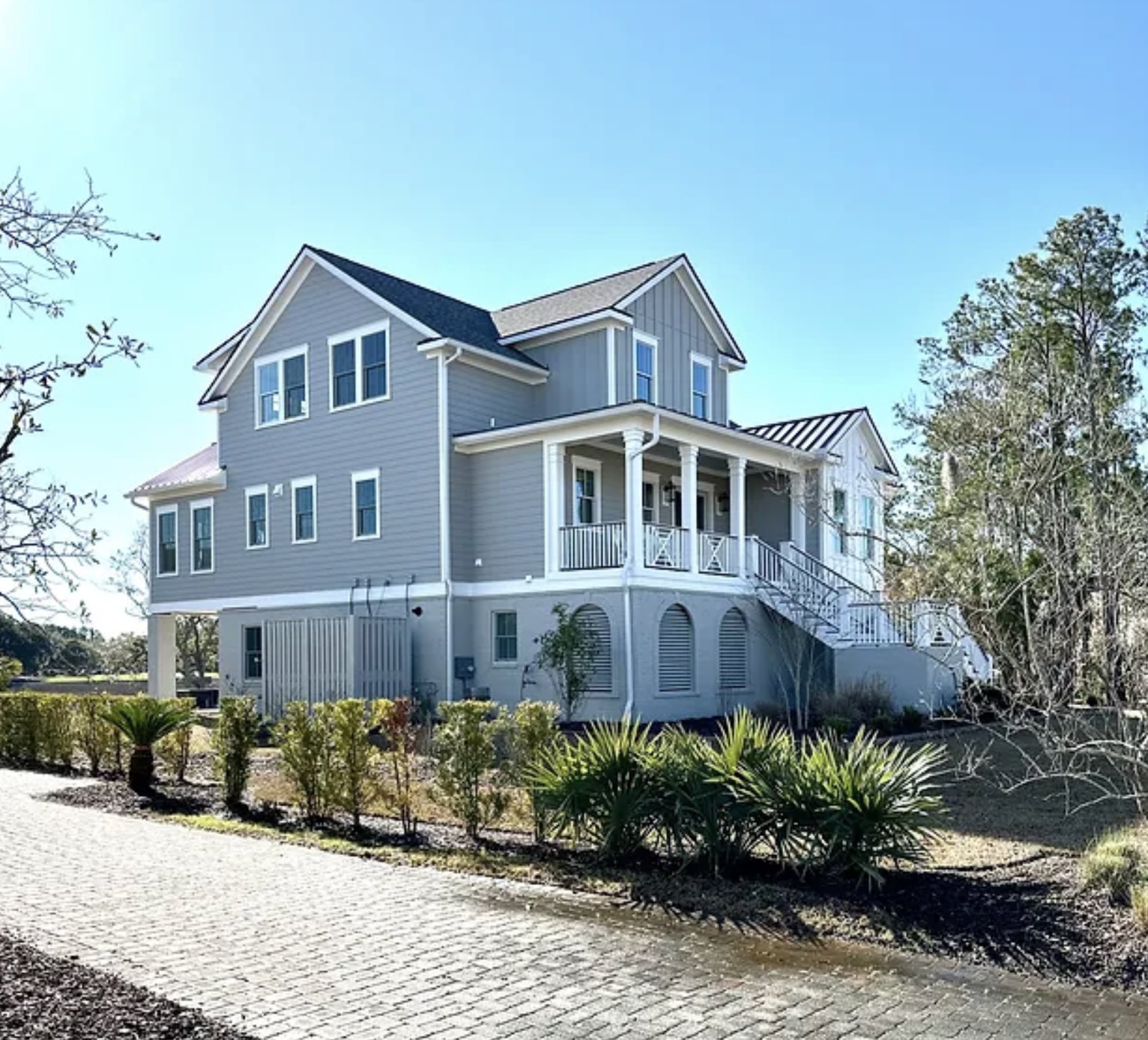
| Raised houses | Many Lowcountry houses are raised off the ground, as Palmetto’s Coastal Retreat project is | The splash zone moves to skirting, lattice, steps and the lowest porch boards, so look there as well as at the siding |
| Older houses | The EPA lead-safe rule covers paid work that disturbs more than 20 square feet of exterior paint on a house built before 1978 | Scraping peeled paint on an older house is regulated work, which changes the preparation |
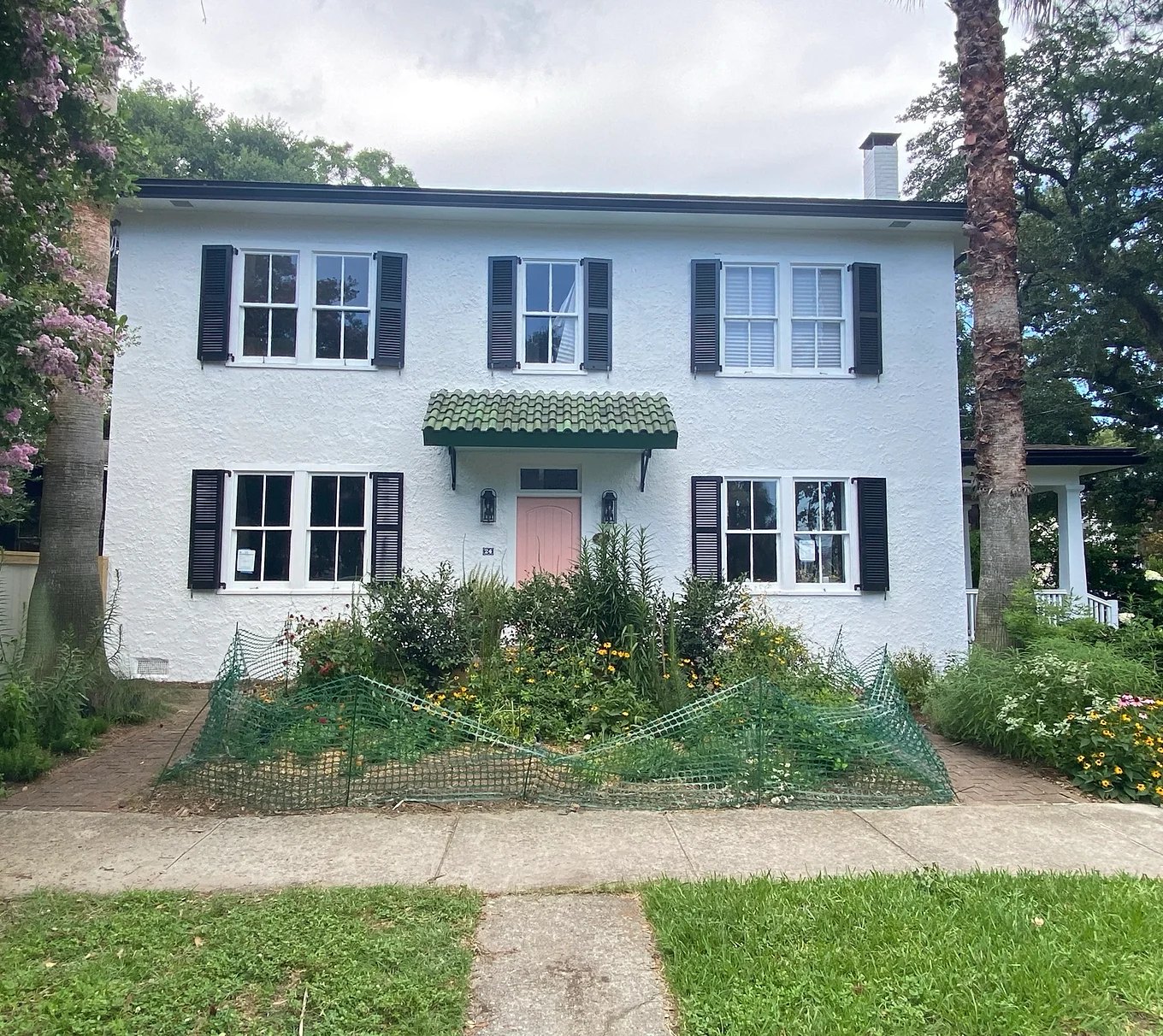
Shaded walls and porch ceilings deserve a closer look. They are where the humid-air figures above matter most, and where mildew, dampness and peeling often show up together.
Where on the house it shows
Note where the paint is failing before you note how bad it looks, because the position points to the source. Walk the house with this list.
- Near the ground. Soil, mulch or planting beds against the siding, and ground that slopes toward the wall. On a raised house, check the skirting, lattice and steps.
- Below a gutter run or at a corner. Overflowing or leaking gutters, clogged outlets and downspouts that empty beside the foundation.
- Around windows, doors and trim joints. Deteriorated caulking and faulty flashing above the openings.
- Under roof edges and near dormers. Defective shingles, flashing along dormers and stains on the soffit.
- On shaded walls and porch ceilings. Shrubbery close to the wall, dark mildew and surfaces that stay damp.
Then do the walk a second time, during or just after a heavy rain. See where water pools, which way it runs across the yard and where each downspout lands. Five minutes in the rain shows more than an hour in the sun.
Where painting stops and drainage starts
Some cures are cheap and quick: clearing gutters, renewing caulk, sealing a leaking joint and cutting back a shrub that touches the wall. Others are not painting at all. Extending or burying downspouts, regrading ground that slopes toward a wall and installing a French drain, which is a perforated pipe in a stone-filled trench wrapped in filter fabric, all belong to a drainage contractor. The right design depends on the soil and slope of your own lot, so ask a local contractor to look at it in the rain and put the fix in writing. If water stands against the foundation, that problem comes before any paint.
A checklist before the new coat goes on
- The moisture source has a fix. Gutters, downspouts, flashing, caulk, shrubs and grade checked, and any drainage work finished.
- The wood has dried. The National Park Service says to let it dry out thoroughly once the moisture is solved. After a wash, Sherwin-Williams advises at least 24 to 48 hours, and on the coast it is wise to add time after heavy rain.
- The failed paint is gone. Loose paint is scraped back and bare wood primed. Soft or rotted boards need carpentry, not another coat.
- The lead rules are handled. On a house built before 1978, paid work that disturbs more than 20 square feet of exterior paint falls under the EPA lead-safe rule.
- The weather cooperates. April and October are Charleston’s mildest months in the NOAA normals, and Palmetto’s best-time post covers the dew point and rain rules.
Palmetto’s exterior repaint planning guide turns these points into a surface-by-surface inventory you can fill in before anyone visits.
Reading a repaint estimate for a house that has peeled
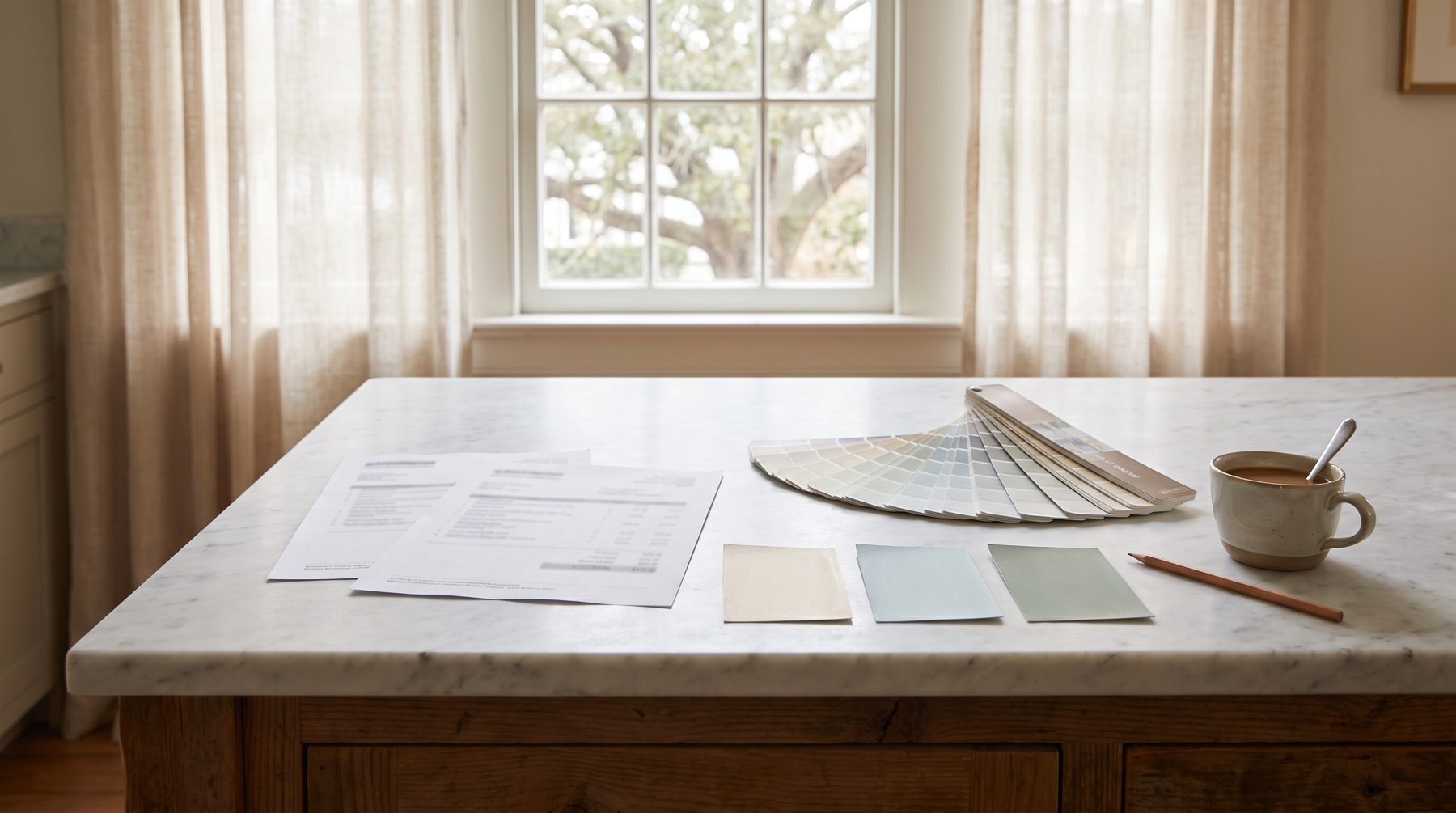
On a house with peeling paint, the wording of the estimate matters more than the total. Ask the painter to list the peeling areas, name the likely cause as far as they can see it, say what preparation is included and say what is left out. Carpentry, drainage and lead-safe containment are worth asking about by name.
If the cause sits outside the paint, a fair estimate says so. Ask what the life of the new coating depends on, and what happens to it if the moisture source stays as it is.
Starting with Palmetto
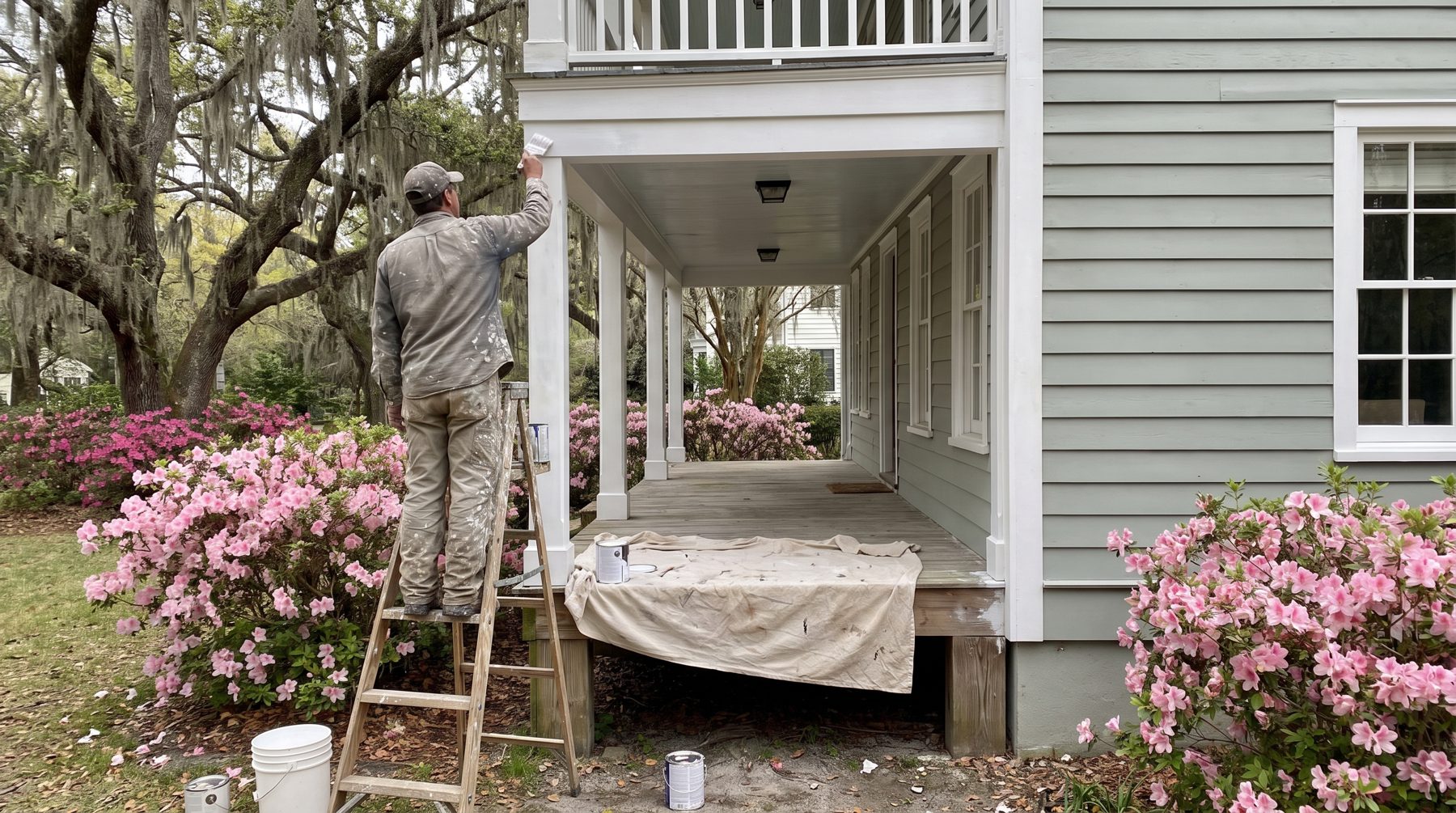
Greg Bores starts every project with a free onsite estimate. Show him where the paint is failing on each side of the house, and mention any standing water, overflowing gutters or damp corners you have noticed. The estimate should set out the preparation and repairs that are included and the work that is a separate job. See an older Charleston house after a repaint in Downtown Charm, read about house painting in Charleston, or request a free quote. Greg answers the phone at 843.998.1649 from 8 AM to 8 PM, seven days a week.
Questions
Why does paint peel on a coastal house?
Most often because moisture collects behind the paint film, according to the National Park Service. On the coast that moisture comes from humid air, heavy rain, leaking gutters, failed caulk and flashing, and plants or soil against the wall.
Will new paint stick over the peeling spots?
Not for long if the moisture is still there. The National Park Service says new paint over an unsolved moisture problem will simply fail, so the source is dealt with first and the failed paint is then scraped, sanded and primed.
Does the slope of my yard have anything to do with peeling paint?
It can. Ground that slopes toward a wall, or a downspout that empties beside the foundation, can keep the lowest siding wet, and wet wood swells and breaks the paint bond. Fixing grade and downspouts is drainage work that comes before the painting.
How dry does the wood need to be before painting?
Thoroughly dry, according to the National Park Service. After a wash, Sherwin-Williams advises at least 24 to 48 hours. Allow extra time after heavy rain or on shaded walls.
Can Palmetto fix the water problem too?
No. Palmetto paints. Regrading, downspout burial and French drains are a drainage contractor’s work. Ask Greg what preparation and repairs a paint estimate includes and what stays a separate job.
Sources
Rainfall and humidity come from the NOAA 1991 to 2020 normals behind Palmetto’s best-time post, with humidity derived from the hourly data. The National Park Service brief was fetched and read on 27 October 2026.
01 / Keep reading
More from the notebook.
Posts and guides for Lowcountry homeowners.

Free painting quotes in Charleston and Mount PleasantTell us about the house.
A conversation, a free onsite estimate and a scope in writing. No pressure to decide on the spot.
843.998.1649 info@palmettopaintingcontractors.com